
7 Early Warning Signs of Lung Cancer You Shouldn’t Ignore
 Williams Clark

A cough that won’t go away. Feeling unusually tired after a normal day. Getting out of breath while climbing stairs you’ve climbed hundreds of times before.
Most of us wouldn’t immediately associate these everyday experiences with lung cancer. We might blame the weather, a lingering infection, stress, or simply getting older.
And often, there’s a harmless explanation. But sometimes, these subtle changes are the body’s way of telling us that something needs attention.
That’s what makes recognizing the early signs of lung cancer so important. The disease can develop quietly, with symptoms that are easy to overlook or mistake for less serious conditions.
According to the World Health Organization (WHO), lung cancer accounted for approximately 2.5 million new cases and 1.8 million deaths worldwide in 2022, making it the leading cause of cancer-related deaths globally.
These figures are concerning, but they also highlight why awareness matters. Understanding lung cancer symptoms and knowing when to seek medical advice can make a meaningful difference.
Why Lung Cancer Symptoms Are Often Overlooked
Unlike some conditions that produce noticeable symptoms early, lung cancer may develop without obvious warning signs. In fact, the American Cancer Society explains that many people don’t experience symptoms until the disease has progressed.
Another challenge is that lung cancer symptoms frequently resemble those of common respiratory conditions, including bronchitis, asthma, and pneumonia.
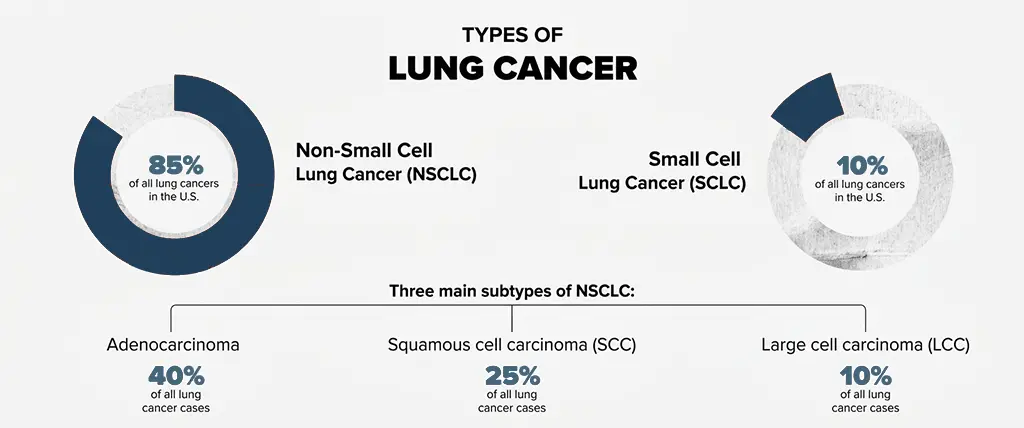
There are also two major categories of lung cancer:
- Non-small cell lung cancer (NSCLC): The more common category, including adenocarcinoma and squamous cell carcinoma, and large cell carcinoma.
- Small cell lung cancer (SCLC): A less common, fast-growing form that tends to spread more quickly.
According to the American Cancer Society, small cell lung cancer represents approximately 10%-15% of lung cancer cases.
Importantly, lung cancer doesn’t affect only people who smoke. Although tobacco exposure is the leading risk factor, people who have never smoked can develop the disease.
Recognize changes in your health, regardless of your smoking history.
7 Early Warning Signs of Lung Cancer
1. A Persistent Cough That Won't Go Away
Everyone coughs occasionally. It’s a natural reflex that helps clear irritants and mucus from the airways.
But what if a cough lingers long after a cold has disappeared?
A persistent cough is among the most recognized signs of lung cancer. It may start as a mild irritation and gradually become more frequent or severe.
Pay particular attention if your cough:
- Continues for three weeks or longer.
- Becomes noticeably worse.
- Changes in sound, frequency, or intensity.
The UK’s National Health Service (NHS) recommends seeing a healthcare professional when a cough persists beyond three weeks.
Remember: A lingering cough doesn’t automatically indicate lung cancer. However, repeatedly treating an unexplained cough without investigating its cause can delay an important diagnosis.
2. Shortness of Breath During Everyday Activities
Have you started feeling breathless after walking a short distance or climbing a few stairs?
It’s easy to attribute this change to reduced fitness or aging. However, unexplained breathlessness can sometimes be associated with lung cancer.
A tumor may narrow or obstruct an airway, making it harder for air to move freely. In other cases, fluid around the lungs or changes in lung function may contribute to breathing difficulties.
The warning sign isn’t necessarily dramatic breathlessness. Sometimes, it’s simply noticing that activities you previously managed comfortably now require more effort.
If you experience new or progressively worsening shortness of breath, consult a healthcare professional.
Sudden, severe breathing difficulty requires emergency medical billing services attention.
3. Chest Pain That Gets Worse When Breathing or Coughing
Chest discomfort can have numerous causes, from muscle strain to acid reflux. However, persistent chest pain should never be dismissed without consideration.
Lung cancer may cause pain or discomfort in the chest, particularly when a tumor affects surrounding tissues.
According to the American Cancer Society, lung cancer-related chest pain may become worse when coughing, laughing, or taking a deep breath.
Some people may also experience unexplained shoulder or upper-back discomfort.
Rather than focusing only on how intense the pain feels, consider whether it’s new, persistent, or worsening.
Important: Sudden, severe chest pain, particularly with breathlessness, sweating, or fainting, requires emergency care because it may indicate a heart or other serious medical problem.
4. Coughing Up Blood, Even a Small Amount
Seeing blood when you cough can be frightening. Even a few streaks of blood in mucus deserve medical attention.
This symptom, known medically as hemoptysis, can occur when irritation, inflammation, or disease affects blood vessels within the respiratory system.
While infections and other noncancerous conditions can cause it, coughing up blood is also one of the recognized lung cancer symptoms.
The National Cancer Institute (NCI) identifies blood in sputum as a potential symptom of both non-small cell and small cell lung cancer.
The amount of blood doesn’t reliably indicate how serious the underlying condition may be.
If you cough up blood, seek urgent medical assessment, even if it happens only once. Large amounts of blood or bleeding accompanied by breathing difficulty require emergency care.
5. Unexplained Weight Loss and Loss of Appetite
Losing weight without changing your diet or exercise routine might initially seem like a welcome surprise.
However, unexplained weight loss can sometimes signal an underlying medical condition, including cancer.
Cancer can affect metabolism, appetite, and the body’s use of energy. As a result, some people experience gradual weight loss without intentionally trying to lose weight.
You might notice your clothes fitting more loosely, feeling full sooner than usual, or losing interest in meals you previously enjoyed.
These changes aren’t specific to lung cancer, but persistent appetite loss combined with other respiratory symptoms deserves medical evaluation.
Instead of dismissing unexpected weight changes, consider them alongside other changes in your overall health.
6. Repeated Chest Infections That Keep Coming Back
Most people recover from bronchitis or pneumonia with appropriate treatment.
But what happens when a chest infection keeps returning, particularly in the same area of the lung?
Sometimes, a lung tumor can partially obstruct an airway, interfering with the normal clearance of mucus and increasing the likelihood of infection.
The NHS identifies recurring chest infections or infections that fail to improve as possible signs of lung cancer.
This doesn’t mean every repeated respiratory infection is cancer-related. Existing lung conditions and other health problems may also increase infection risk.
However, if symptoms repeatedly return after treatment or a chest infection isn’t resolving as expected, further investigation may be necessary.
7. Constant Fatigue, Weakness, or Unusual Hoarseness
Feeling tired after a busy week is normal. Feeling consistently exhausted despite adequate rest is different.
Cancer-related fatigue can be persistent and may interfere with everyday activities. Some people experience unusual weakness, reduced stamina, or difficulty completing tasks that previously felt effortless.
Another less obvious warning sign is a persistent change in voice.
Lung cancer can sometimes affect nerves involved in controlling the vocal cords, leading to hoarseness that doesn’t resolve.
The American Cancer Society recognizes both fatigue and hoarseness among possible lung cancer symptoms.
Neither symptom alone confirms cancer. Still, ongoing fatigue or unexplained hoarseness, particularly alongside a persistent cough or breathing changes, should be discussed with a healthcare professional.
Why Early Detection Makes Such a Difference
Lung cancer outcomes vary considerably depending on the cancer type, stage at diagnosis, and treatment options.
Data from the National Cancer Institute illustrate the importance of detecting lung cancer before it spreads to distant organs.
Five-Year Relative Survival by Stage at Diagnosis
United States lung cancer data, diagnoses from 2014–2020.
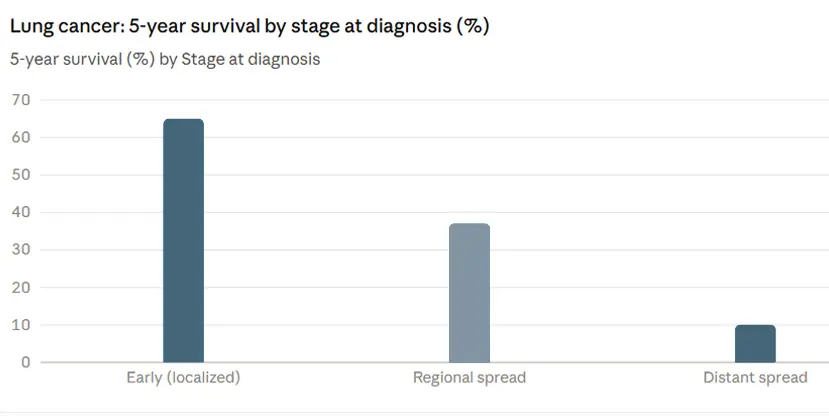
Source: National Cancer Institute, Non-Small Cell Lung Cancer Treatment (PDQ). These are population-level estimates, not individual survival predictions.
Note: Localized means cancer has not spread beyond its original area; regional means nearby spread, and distant means spread to distant parts of the body.
These numbers don’t predict any one person’s future. They reflect outcomes among large groups of patients, and individual experiences can differ.
However, they demonstrate an important point: lung cancer is generally more treatable when identified before it has spread extensively.
This is particularly relevant to small cell lung cancer, which can progress rapidly and is frequently diagnosed after it has already spread.
Who Should Consider Lung Cancer Screening?
Recognizing symptoms is important, but screening can sometimes identify lung cancer before symptoms develop.
The Centers for Disease Control and Prevention (CDC) identifies low-dose computed tomography (LDCT) as the recommended screening method for eligible high-risk individuals.
Under U.S. Preventive Services Task Force recommendations, annual LDCT screening is advised for adults who meet all three criteria:
- Are between 50 and 80 years old.
- Have a smoking history of at least 20 pack-years.
- Currently smoke or quit within the previous 15 years.
A pack-year means smoking an average of one pack of cigarettes daily for one year. Twenty pack-years could mean one pack daily for 20 years or two packs daily for 10 years.
Other professional guidelines may differ, so discussing your personal risk with your healthcare provider is worthwhile.
Importantly, screening is intended for people without symptoms. If you’re already experiencing possible lung cancer symptoms, you need a medical assessment rather than waiting for a routine screening appointment.
Final Thoughts - Pay Attention to What Your Body Is Telling You
Most coughs aren’t caused by cancer. Most episodes of tiredness have nothing to do with a serious illness. And experiencing one of these symptoms doesn’t mean you have lung cancer.
Nevertheless, symptoms that persist, worsen, or seem unusual for you deserve attention.
Whether it’s a cough that refuses to disappear, unexplained weight loss, or repeated chest infections, seeking timely medical advice is far better than waiting indefinitely for symptoms to resolve.
Medical Disclaimer: This article is meant to inform, not diagnose. Always consult a healthcare professional for medical concerns.
Stay Updated
Get weekly RCM insights, trends and expert strategies delivered to your inbox.