
Does Mental Health Therapy Really Work? Types, Benefits, and What to Expect
 Williams Clark

Talking about personal struggles with a stranger might sound uncomfortable. What could someone possibly say that would make anxiety disappear, ease depression, or help you recover from a painful experience?
It’s a question many people have before considering therapy.
But mental health therapy is much more than talking about feelings. It’s a structured, evidence-based approach that helps people understand their thoughts, manage emotions, change unhelpful behaviors, and develop healthier ways of responding to life’s challenges.
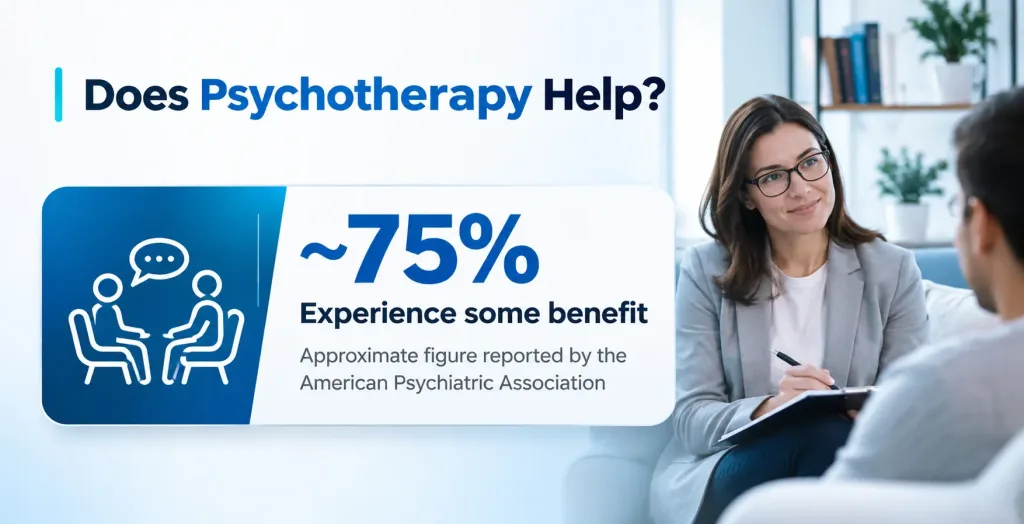
According to the American Psychiatric Association, approximately 75% of people who enter psychotherapy experience some benefit.
What is Psychotherapy?
That doesn’t mean everyone improves at the same pace or that therapy works equally well for every condition. However, it shows why psychotherapy remains an important part of mental healthcare.
So, what actually happens in therapy, which approaches are supported by research and how can you find the right therapist?
What Is Mental Health Therapy?
Mental health therapy, also called psychotherapy or talk therapy, is a professional treatment approach designed to help people manage emotional, psychological and behavioral difficulties.
A trained therapist works with individuals to understand their experiences, identify challenges, and develop practical strategies for improvement.
Therapy may help people experiencing:
- Depression or persistent sadness.
- Anxiety, excessive worry, or panic attacks.
- Trauma and post-traumatic stress disorder (PTSD).
- Relationship difficulties and emotional distress.
- Grief, major life changes, or overwhelming stress.
- Certain behavioral and personality-related difficulties.
Importantly, therapy isn’t reserved exclusively for people with diagnosed mental health conditions.
Someone experiencing ongoing relationship problems, significant stress, or difficulty coping with life changes may also benefit from professional support.
How Effective Is Mental Health Therapy?
The effectiveness of psychotherapy has been examined through decades of clinical research.
The World Health Organization (WHO) recommends structured psychological treatments, including cognitive behavioral therapy, interpersonal therapy, and behavioral activation, for adults with moderate-to-severe depression.
The American Psychological Association also recognizes psychotherapy as an effective treatment for several mental health conditions.
Results depend on the condition being treated, the therapeutic approach, the therapist’s expertise and the individual’s needs and circumstances.
6 Types of Therapy for Mental Health
Different therapeutic approaches address different concerns. Understanding the most common types of therapy for mental health can make choosing professional support less confusing.
Cognitive Behavioral Therapy (CBT)
CBT is among the most widely researched approaches to mental healthcare.
It focuses on identifying connections between thoughts, feelings, and behaviors.
For example, someone with social anxiety might repeatedly think, “Everyone will judge me if I speak.”
CBT can help that person examine the thought and gradually practice responding differently to situations that trigger anxiety.
CBT has evidence supporting its use for depression, anxiety disorders, and several other mental health conditions.
Dialectical Behavior Therapy (DBT)
DBT teaches practical skills for managing intense emotions, handling stressful situations, and improving relationships.
It often combines individual sessions with structured skills training.
DBT was originally developed for people experiencing chronic suicidal behaviors and borderline personality disorder, although adapted approaches are used for other difficulties.
Its central skills include mindfulness, emotional regulation, distress tolerance, and interpersonal effectiveness.
Interpersonal Therapy (IPT)
Interpersonal therapy focuses on the relationship between emotional health and social experiences.
It may be particularly helpful when depression is connected with grief, relationship conflict, or major life transitions.
For example, someone struggling emotionally after divorce or bereavement may use IPT to understand and address interpersonal difficulties.
Psychodynamic Therapy
Psychodynamic therapy explores how past experiences, relationships, and recurring emotional patterns may influence present behavior.
The therapist helps individuals recognize patterns they might not fully understand.
This approach may be useful for certain emotional and relationship difficulties, although its suitability depends on the individual’s condition.
Trauma-Focused Therapy
Trauma-focused approaches are designed to help individuals process traumatic experiences and reduce associated symptoms.
Examples include trauma-focused CBT and eye movement desensitization and reprocessing (EMDR).
These treatments may be recommended for PTSD after professional assessment.
Group and Family Therapy
Therapy doesn’t always involve one patient speaking privately with one therapist.
Group therapy brings people together under professional guidance, while family therapy focuses on communication, relationships, and shared difficulties.
Both may be helpful when used for appropriate needs.
Which Therapy Is Right for You?
| Therapy type | Common applications |
|---|---|
| CBT | Anxiety, depression and negative thinking patterns |
| DBT | Emotional regulation and managing intense emotions |
| IPT | Depression, grief and relationship problems |
| Psychodynamic therapy | Recurring emotional patterns and unresolved conflicts |
| Trauma-focused therapy | PTSD and trauma related difficulties |
Group or family therapy Shared concerns, relationships and communication.
The best approach depends on a professional assessment rather than simply choosing whichever therapy is most popular.
What Actually Happens During a Therapy Session?
For someone considering therapy for the first time, uncertainty about the process can be a major barrier.
An initial session typically involves discussing your concerns, relevant personal history, and what you hope to achieve.
Your therapist may ask about symptoms, relationships, sleep, stress, and daily functioning.
Together, you may establish treatment goals and discuss an appropriate approach.
Later sessions can involve identifying patterns, practicing coping strategies, exploring emotions, or completing structured exercises between appointments.
Therapy is collaborative. You can ask questions, discuss concerns, and provide feedback about your progress.
You also don’t have to disclose every painful experience during your first appointment.
How Long Does Mental Health Therapy Take?
There isn’t a universal timeline.
Some structured treatments involve a relatively brief series of sessions, while others continue for months or longer.
The American Psychological Association explains that therapy duration depends on factors including the condition, treatment goals, and individual progress.
Progress also isn’t always immediate or consistent.
Some people notice improvements relatively early. Others need additional time, a modified treatment plan, or combined approaches involving therapy and medication.
How to Find Mental Health Therapy Near Me
Searching for “mental health therapy near me” is often the first step toward seeking professional support.
However, proximity shouldn’t be your only consideration.
Look for a therapist with appropriate professional credentials, experience treating your concerns, and an approach supported by evidence.
Before booking, consider asking:
- What qualifications and professional registration do you hold?
- Do you have experience treating my concerns?
- What therapy approaches do you use?
- How much does each session cost?
- Do you offer online appointments?
- How is my personal information protected?
In the United States, FindTreatment.gov provides a government-supported treatment directory. Readers elsewhere should consult recognized local professional registries or healthcare providers.
SAMHSA
Online therapy may also improve access when travel, scheduling, or location creates difficulties.
Can Therapy Replace Medication?
Sometimes therapy is an appropriate treatment on its own. In other circumstances, medication or a combination of treatments may be recommended.
For example, some people with depression benefit from psychotherapy, while others may need additional medical treatment depending on symptom severity and clinical circumstances.
According to WHO guidance, structured psychological interventions are important treatment options for depression.
NCBI
Medication decisions should be discussed with a qualified prescribing professional, and prescribed treatment shouldn’t be stopped without medical advice.
When Should You Consider Seeking Therapy?
You don’t need to reach a crisis before seeking mental healthcare.
Persistent anxiety, low mood, emotional distress, difficult relationships, or problems functioning at work or home can all be reasons to consult a professional.
If symptoms interfere with everyday responsibilities or continue despite personal coping efforts, seeking support is especially worthwhile.
If someone is at immediate risk of self-harm or suicide, emergency or crisis services should be contacted promptly rather than waiting for a routine appointment.
Therapy Is More Than Just Talking
Mental health therapy provides a structured opportunity to understand emotional difficulties, develop coping skills, and work toward meaningful changes.
Different types of therapy for mental health offer different tools, and no single method is right for everyone.
The most important step is finding qualified support that matches your needs, preferences, and circumstances.
Therapy isn’t about having someone tell you how to live. It’s about developing the understanding and skills to navigate life’s challenges more effectively.
Stay Updated
Get weekly RCM insights, trends and expert strategies delivered to your inbox.
2026 RCM Benchmarks Report
Key metrics and trends to help you optimize performance.
Medmax RCM supports therapists, counselors, and behavioral health practices with specialized mental health billing, coding, and claims management solutions, helping your team spend less time on administrative complexities.