
Can You Get Breast Cancer Without a Family History? Here’s What You Should Know
 Williams Clark
Imagine being asked during a routine medical appointment, “Does anyone in your family have a history of breast cancer?”
You think about your mother, sisters, aunts, and grandmothers. Nobody has ever been diagnosed. Naturally, you feel reassured.
But does having no family history mean you’re safe from breast cancer
The answer is no. In fact, most women diagnosed with breast cancer have no known family history of the disease.
This is one of the most important facts in breast cancer awareness, yet it’s also one of the most commonly misunderstood.
According to the World Health Organization (WHO), approximately 80% of breast cancer cases occur in women with no specific risk factors other than being female and getting older.
The WHO also confirms that most women diagnosed with the disease have no known family history.
So, while family history matters, it isn’t the only factor that determines your risk
Understanding what actually contributes to breast cancer, which symptoms deserve attention, and when to consider screening can help you make more informed decisions about your health.
Why Family History Isn't the Whole Story
We often hear that certain diseases “run in families,” and breast cancer can certainly be one of them.
Having a mother, sister, or daughter who has had breast cancer can increase your own risk.
However, many cases develop in people without an identifiable inherited risk.
This happens because breast cancer isn’t caused by a single factor. It develops when cells in the breast acquire changes that allow them to grow uncontrollably.
Some of these changes are inherited, but many develop during a person’s lifetime.
The National Cancer Institute (NCI) explains that inherited genetic changes account for only a minority of breast cancer cases.
This distinction is important:
- Inherited genetic changes are passed from parents to children and may increase the likelihood of developing cancer.
- Acquired genetic changes develop during life and can result from normal cellular processes, aging, and other influences.
Not having a family history doesn’t mean you cannot develop these acquired changes.
In other words, your family’s medical history provides useful information, but it cannot predict your future health with certainty.
Breast Cancer by the Numbers - A Global Health Concern
Breast cancer remains the most frequently diagnosed cancer among women worldwide.
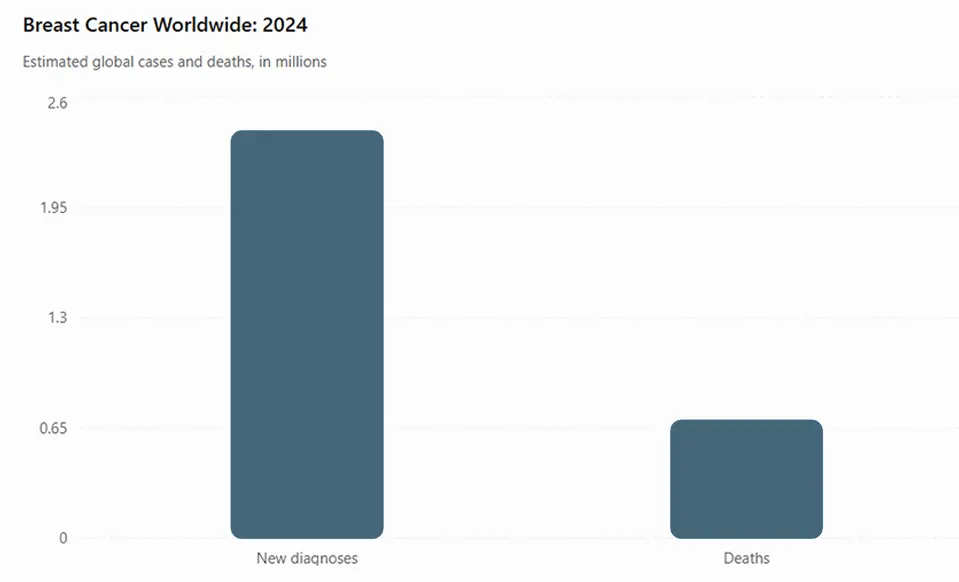
According to the WHO’s 2026 fact sheet, an estimated 2.4 million women were diagnosed with breast cancer globally in 2024, while approximately 694,000 women died from the disease.
These figures represent the worldwide burden of breast cancer, not an individual person’s probability of developing or dying from the disease.
These figures show why breast cancer awareness should extend beyond people with a known genetic predisposition.
They also reinforce a central message: knowing your personal risk and seeking timely medical attention are important, regardless of whether anyone in your family has been affected.
What Increases Breast Cancer Risk Without a Family History?
Several factors can influence breast cancer risk even when there are no known cases in your family.
Some cannot be changed, while others involve health and lifestyle choices.
Getting Older
Age is one of the strongest risk factors for breast cancer.
According to the Centers for Disease Control and Prevention (CDC), most breast cancers are diagnosed in women aged 50 or older.
As we age, cells have had more time to acquire genetic changes that may contribute to cancer development.
However, younger women can also develop breast cancer, so new or unusual breast changes should never be dismissed simply because of age.
Breast Density
Did you know that having dense breasts can influence your breast cancer risk?
Breast density describes the amount of glandular and fibrous tissue compared with fatty tissue in the breast.
Women with dense breasts have a higher risk of developing breast cancer than women with less dense breasts. Dense tissue can also make abnormalities harder to identify on mammograms.
Breast density cannot be reliably determined by how breasts look or feel. It is assessed through breast imaging.
Hormonal and Reproductive Factor
Lifetime exposure to certain hormones, particularly estrogen, can influence breast cancer risk.
Factors associated with increased risk include starting menstruation at an early age, entering menopause later, and certain reproductive histories.
Some forms of menopausal hormone therapy may also increase risk, depending on the hormones used and the duration of treatment.
These associations do not mean that any particular reproductive choice will cause cancer.
Lifestyle-Related Factors
Everyday habits can also influence breast cancer risk.
The CDC identifies alcohol consumption, limited physical activity, and excess body weight after menopause among important potentially modifiable risk factors.
This doesn’t mean that everyone who develops breast cancer has made unhealthy choices. Many people develop the disease despite maintaining healthy lifestyles.
Still, adopting healthier habits may help reduce risk and improve overall well-being.
Breast Cancer Risk Factors at a Glance
| Risk factor | What you should know | Can you change it? |
|---|---|---|
| Increasing age | Breast cancer becomes more common with age. | No |
| Dense breast tissue | Associated with higher risk and can complicate mammogram interpretation. | No |
| Inherited genetic changes | Certain inherited mutations substantially increase risk. | No |
| Alcohol consumption | Risk increases with greater alcohol intake. | Yes |
| Excess weight after menopause | Associated with increased risk. | Often modifiable |
| Physical inactivity | Regular physical activity is associated with lower risk. | Yes |
| Certain hormone therapies | Risk depends on the type and duration of treatment. | Discuss with a doctor |
Source: CDC — Breast Cancer Risk Factors. These factors influence risk differently and are not guarantees that cancer will or will not develop.
Breast Cancer Symptoms You Should Never Ignore
One common misconception is that breast cancer always begins with a noticeable lump.
Although a new lump is an important warning sign, breast cancer symptoms can appear in several other ways. Some people experience no obvious symptoms at all.
According to the CDC, possible breast cancer symptoms include:
- A new lump or thickening in the breast or armpit.
- Unusual changes in breast size or shape.
- Dimpling, irritation, or changes in breast skin.
- A nipple that suddenly turns inward.
- Nipple discharge, especially if bloody.
Redness, flaky skin, or persistent changes around the nipple. - Unexplained pain in the breast.
These symptoms don’t necessarily indicate cancer. Infections, hormonal changes, cysts, and other noncancerous conditions can cause similar changes.
However, any new, unexplained, or persistent breast change deserves medical evaluation, even if you have no family history of breast cancer.
It’s also worth remembering that breast cancer can develop before noticeable symptoms appear. This is one reason why appropriate screening matters.
When Should You Start Breast Cancer Screening?
If breast cancer doesn’t run in your family, you might assume that regular screening isn’t necessary.
But screening recommendations are not based on family history alone.
A mammogram is a specialized X-ray that can detect certain breast abnormalities before they become noticeable.
The U.S. Preventive Services Task Force (USPSTF) recommends that women aged 40 to 74 undergo screening mammography every two years.
The American Cancer Society offers slightly different recommendations, including the option to begin annual mammograms between ages 40 and 44 and recommending annual screening from ages 45 to 54.
The most appropriate screening schedule depends on individual risk, medical history, and local healthcare guidelines.
Women with inherited high-risk genetic changes or other major risk factors may need screening earlier or additional imaging, such as breast MRI.
One important distinction: Screening is for people without symptoms. If you notice a suspicious breast change, contact a healthcare professional rather than waiting for your next scheduled mammogram.
Can You Lower Your Breast Cancer Risk?
No method can completely prevent breast cancer, but certain habits may help reduce the likelihood of developing it.
The CDC recommends maintaining a healthy weight, staying physically active, and limiting or avoiding alcohol.
It’s equally important to discuss hormone therapy with your healthcare provider and share any relevant personal or family medical history.
Instead of focusing on one perfect diet or a particular supplement, focus on habits that support your health over the long term.
And remember, developing breast cancer doesn’t necessarily mean someone could have prevented it.
Why Breast Cancer Awareness Month Matters for Everyone
Every October, Breast Cancer Awareness Month brings attention to prevention, early detection, treatment, and support for people affected by the disease.
Pink ribbons, awareness campaigns, and community events help start conversations. But meaningful breast cancer awareness goes beyond recognizing a symbol.
It means understanding that breast cancer can affect people without an inherited predisposition, recognizing breast cancer symptoms, and knowing when to seek care.
It also means encouraging conversations about screening and helping people overcome barriers to medical services.
For someone who has always believed they’re safe because breast cancer doesn’t run in their family, learning the facts could change how they approach their health. That’s one of the most valuable outcomes of Breast Cancer Awareness Month.
Final Thoughts - No Family History Doesn't Mean No Risk
Having no family history of breast cancer can be reassuring, but it should never be mistaken for complete protection.
Most women who develop breast cancer have no known family history of the disease.
Your age, breast density, hormonal factors, lifestyle, and other biological influences can all play a role.
The important thing isn’t to become worried about every change in your body. It’s to understand your personal risk, recognize potential breast cancer symptoms, and follow appropriate screening recommendations.
Breast cancer awareness starts with knowing that everyone deserves to take their breast health seriously, regardless of family history.
Medical Disclaimer: This article is for educational purposes only and does not replace professional medical advice, diagnosis, or treatment.
Stay Updated
Get weekly RCM insights, trends and expert strategies delivered to your inbox.