
Is That Spot on Your Skin Harmless or Something Serious?
 Williams Clark
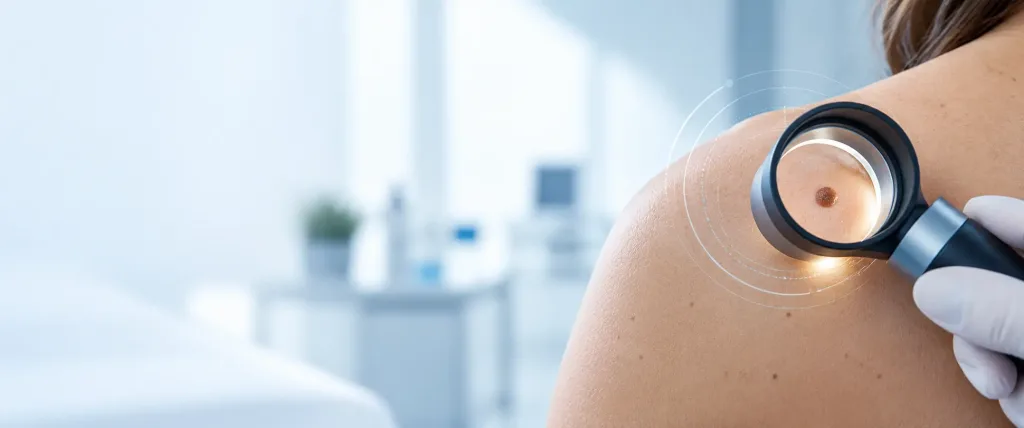
You notice a small brown spot on your arm while getting dressed. It wasn’t there before, or perhaps you’ve just never paid attention to it. You look closely, wonder whether it’s a new mole or a sign of something serious, and eventually forget about it.
Sound familiar?
Our skin changes throughout life. New freckles appear, existing moles may change, and harmless growths become more common as we age. Most of these changes aren’t dangerous. But occasionally, what looks like an ordinary spot could be an early warning sign of skin cancer.
The challenge is knowing which changes deserve attention.
According to the American Academy of Dermatology (AAD), skin cancer is the most common cancer in the United States, with approximately 9,500 people diagnosed every day.
The encouraging news? Many types of skin cancer are highly treatable when identified early.
Understanding skin cancer symptoms, recognizing unusual changes, and knowing when to visit a dermatologist can help you take better care of your skin without worrying about every new mark.
Not Every Spot Is Skin Cancer - What's Normal?
Before looking at the warning signs of skin cancer, it’s important to understand that many common skin spots are harmless.
Our skin naturally develops different marks and growths over time. Some are present from childhood, while others appear with age, hormonal changes, or sun exposure.
Common examples include:
- Moles: Usually brown, black, or skin-colored spots formed by clusters of pigment-producing cells. Most remain harmless.
- Freckles: Small, flat spots often associated with genetics and sun exposure.
- Age spots: Flat brown patches that commonly develop on sun-exposed areas as people get older.
- Seborrheic keratoses: Noncancerous growths that may appear waxy, rough, or as though they’re stuck onto the skin.
- Skin tags: Small, soft growths frequently found around the neck, armpits, or skin folds.
These spots are generally benign, meaning they aren’t cancerous.
However, appearance alone isn’t always enough to distinguish a harmless growth from skin cancer. Some cancerous lesions can resemble ordinary moles, pimples, or age spots.
The most useful question isn’t simply, “Does this spot look strange?”
It’s also, “Is this spot new, changing, bleeding, or behaving differently from the others?”
Why Paying Attention to Skin Changes Matters
Skin cancer develops when abnormal skin cells begin growing uncontrollably. Ultraviolet (UV) radiation from sunlight and tanning devices is a major contributing factor, although genetics, immune health, and other factors also influence risk.
The scale of the problem is significant.
According to the International Agency for Research on Cancer (IARC), an estimated 331,722 new melanoma cases and 58,667 melanoma-related deaths occurred worldwide in 2022.
In the United States alone, the American Cancer Society estimates approximately 112,000 new invasive melanoma diagnoses and 8,510 melanoma deaths in 2026.
Understanding the Three Main Types of Skin Cancer
Not all skin cancers look or behave alike. Knowing the differences can help explain why suspicious skin changes may appear in several forms.
Basal Cell Carcinoma (BCC)
Basal cell carcinoma is the most common type of skin cancer.
It often develops on sun-exposed areas, including the face, neck, and ears. A basal cell carcinoma may look like a shiny or pearly bump, a pinkish patch, or a small sore that repeatedly bleeds and heals.
This cancer usually grows slowly and rarely spreads to distant organs. However, untreated lesions can grow into surrounding tissues and cause considerable damage.
Squamous Cell Carcinoma (SCC)
Squamous cell carcinoma is another common form of skin cancer.
It may appear as a rough, scaly patch, a firm raised bump, or an open sore that doesn’t heal.
Unlike many basal cell carcinomas, squamous cell carcinomas have a greater potential to spread, particularly when they become large or develop in certain locations.
Melanoma
Melanoma is less common than basal cell and squamous cell carcinomas, but it is more likely to spread to other parts of the body.
It develops from melanocytes, the cells responsible for producing skin pigment.
Melanoma may resemble an unusual mole, a changing dark spot, or sometimes a pink or skin-colored growth.
According to the National Cancer Institute, melanoma is responsible for most skin cancer deaths, making early recognition especially important.
Quick Comparison: Types of Skin Cancer
| Type | Common appearance | Important characteristic |
|---|---|---|
| Basal cell carcinoma | Shiny bump, pearly growth, or non-healing sore | Usually slow-growing; rarely spreads |
| Squamous cell carcinoma | Scaly patch, firm bump, or crusted sore | Can spread if untreated |
| Melanoma | Changing mole or unusual pigmented or nonpigmented spot | Greater potential to spread |
Sources: American Academy of Dermatology Billing and National Cancer Institute. These descriptions are not sufficient for self-diagnosis.
7 Warning Signs That a Skin Spot May Be Serious
Many skin cancer symptoms are visible before a person experiences pain or other physical discomfort.
Here are seven changes worth paying attention to.
A Mole That Changes Its Appearance
A mole that gradually changes in size, shape, or color deserves attention.
You might notice that it becomes darker, develops uneven edges, or begins growing after remaining unchanged for years.
The American Academy of Dermatology identifies changing spots as one of the important signs of skin cancer, particularly melanoma.
Not every changing mole is cancerous, but a dermatologist should evaluate unexplained changes.
A Spot With Several Different Colors
Most ordinary moles have a fairly consistent color, although benign moles can vary in appearance.
Melanoma may contain different shades of brown, black, tan, red, white, or blue within the same lesion.
A spot with unusual or changing pigmentation shouldn’t automatically be considered cancerous, but it warrants attention.
A Sore That Refuses to Heal
Have you noticed a small wound that keeps forming a scab but never completely disappears?
A persistent sore can be a symptom of basal cell or squamous cell carcinoma.
It may bleed occasionally, appear to improve, and then reopen.
If a sore isn’t healing as expected, particularly without an obvious injury, arrange a medical assessment.
A Shiny, Pearly, or Unusual Bump
Not all skin cancers appear as dark spots.
Some basal cell carcinomas look like translucent or shiny bumps that may be mistaken for harmless growths or pimples.
The surface may appear smooth, and tiny visible blood vessels may sometimes be present.
A new bump that continues growing or repeatedly bleeds should be examined.
A Rough or Scaly Patch That Persists
Dry skin is extremely common, especially during colder weather.
However, a persistent rough patch that doesn’t improve may sometimes represent a precancerous condition, such as actinic keratosis, or a form of squamous cell carcinoma.
Watch for patches that become thicker, tender, crusted, or repeatedly irritated.
A Spot That Itches, Bleeds, or Becomes Painful
A mole or growth that begins itching, bleeding without an obvious injury, or becoming painful may need further investigation.
These symptoms can occur for several harmless reasons, but they are also recognized skin cancer symptoms.
Importantly, skin cancer does not always hurt. A suspicious growth may remain completely painless.
A Spot That Looks Different From All Your Others
Dermatologists sometimes use the “ugly duckling” concept when discussing melanoma.
The idea is simple: most of a person’s moles tend to share certain characteristics. A spot that looks noticeably different from the others may deserve closer examination.
For example, if most of your moles are small and light brown but one is unusually dark, irregular, or growing, don’t ignore it.
This doesn’t mean the spot is necessarily cancerous. It means a professional skin examination may be appropriate.
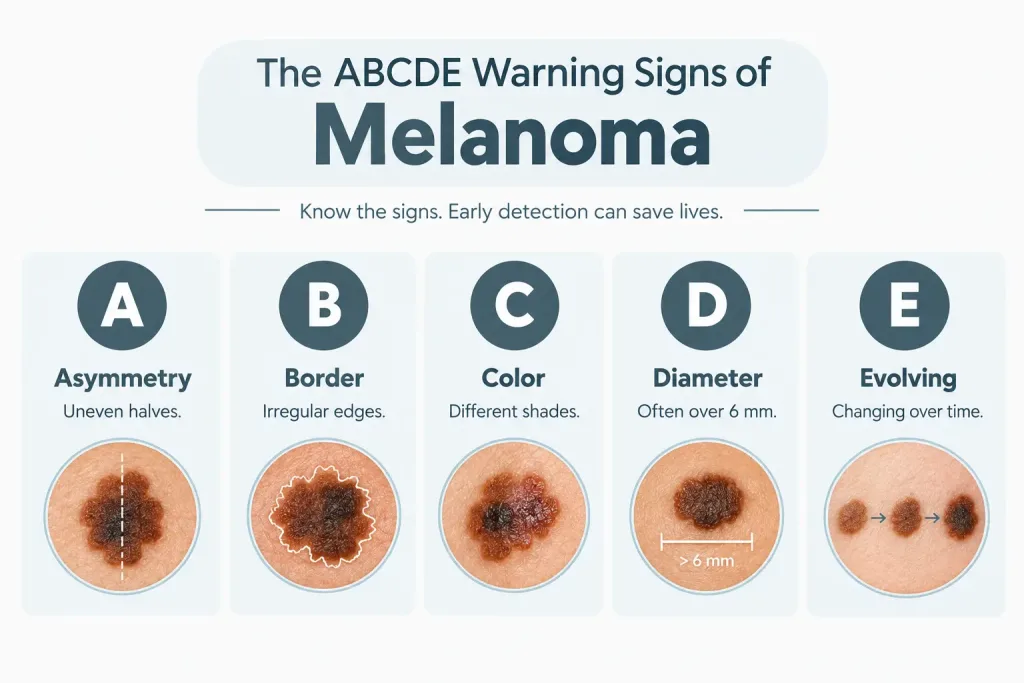
The ABCDE Rule - A Simple Way to Check Suspicious Moles
One of the most practical ways to recognize potential melanoma warning signs is to remember the ABCDE rule, recommended by the American Academy of Dermatology.
How Can You Reduce Your Risk of Skin Cancer?
While not every case can be prevented, protecting your skin against excessive UV exposure can lower your risk.
The American Cancer Society and dermatology organizations recommend seeking shade, wearing protective clothing, using broad-spectrum sunscreen with SPF 30 or higher, and avoiding tanning beds.
It’s also useful to become familiar with your skin’s normal appearance. This can make it easier to recognize changes that may otherwise go unnoticed.
Remember, early detection isn’t about examining every tiny mark with fear. It’s about noticing meaningful changes and seeking appropriate medical care.
When in Doubt, Get It Checked
A new spot on your skin might be a harmless mole, freckle, or age-related change. But occasionally, it could signal something that needs medical attention.
Understanding the different types of skin cancer and recognizing common skin cancer symptoms can help you identify changes worth investigating.
The most important signs of skin cancer aren’t always dramatic. Sometimes, they’re as subtle as a mole changing color, a sore that repeatedly returns, or a small bump that doesn’t disappear.
You don’t need to diagnose the spot yourself. You simply need to recognize when it’s worth showing to a professional.
Your skin can reveal important changes in your health. Paying attention to those changes is a simple but valuable habit.
Medical Disclaimer: This article is for educational purposes only and does not replace professional medical advice, diagnosis, or treatment.
Stay Updated
Get weekly RCM insights, trends and expert strategies delivered to your inbox.