
Mental Health Medications Explained Types, Benefits, Risks and What You Should Know
 Williams Clark

Taking medication for a mental health condition can raise questions that aren’t always easy to discuss. Will it change your personality? How long will you need it? What if it causes side effects? And does needing medication mean therapy alone isn’t enough?
These concerns are understandable, particularly when mental health treatment is surrounded by misconceptions.
The reality is that mental health medications are an established part of treatment for many psychiatric conditions. They can help reduce symptoms, support daily functioning, and, for some people, make it easier to participate in therapy and other activities.
However, medication isn’t a universal solution. Its effectiveness depends on the condition being treated, the medication selected, individual health factors, and ongoing medical supervision.
According to the National Institute of Mental Health (NIMH), psychiatric medications can play an important role in treating mental disorders, often alongside psychotherapy and other supportive interventions.
Understanding how these medications work, what medication management involves, and how insurance affects access can help patients make more informed treatment decisions.
How Common Is Mental Health Medication Use?
Mental health medications are used by millions of adults in the United States.
A 2026 report from the Centers for Disease Control and Prevention (CDC), analyzing 2024 National Health Interview Survey data, found that:
- 19.3% of U.S. adults had taken prescription medication for their mental health during the previous 12 months.
- 14.0% of U.S. adults had received counseling or therapy from a mental health professional during the same period.
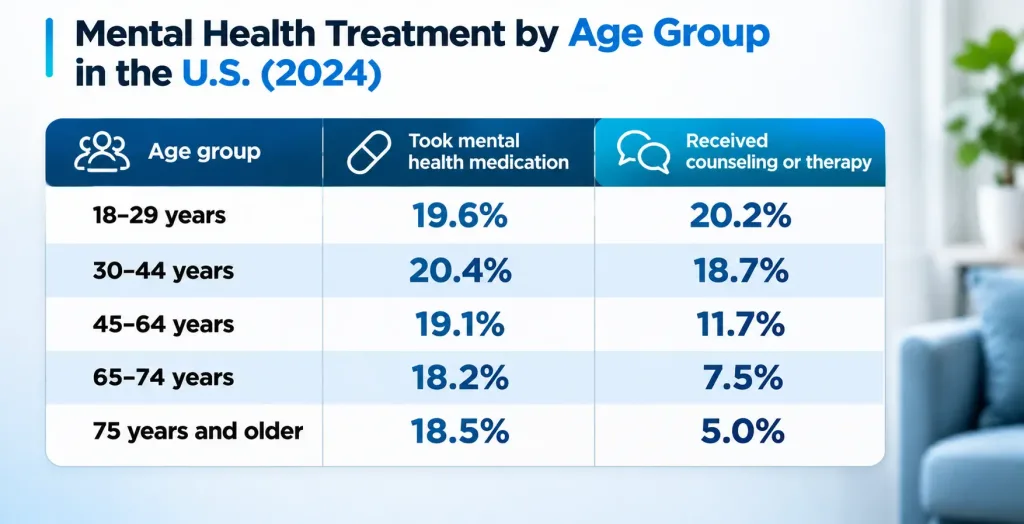
Source: Centers for Disease Control and Prevention (CDC), National Center for Health Statistics, 2026 report using 2024 data.
These categories overlap: some adults received both medication and therapy. The percentages should not be added together, and they do not represent treatment effectiveness.
The numbers show how widely mental health treatment is used. They also highlight that medication and therapy are both important options, sometimes used together.
What Are the Main Types of Mental Health Medications?
Different psychiatric medications address different symptoms and conditions. There is no single medication suitable for every mental health problem.
Antidepressants
Antidepressants are commonly prescribed for depression and certain anxiety disorders.
Selective serotonin reuptake inhibitors (SSRIs), such as sertraline and fluoxetine, are frequently used examples.
These medications affect neurotransmitter signaling involved in mood regulation. Benefits may take several weeks to become noticeable, although some symptoms can improve earlier.
Possible side effects include nausea, sleep changes, and sexual difficulties.
Anti-Anxiety Medications
Some medications help manage anxiety and panic symptoms.
Benzodiazepines may provide relatively rapid relief in selected circumstances, but they carry risks including dependence, sedation, and withdrawal.
Other medications may be preferred for longer-term treatment, depending on the diagnosis.
Mood Stabilizers
Mood stabilizers are commonly associated with bipolar disorder.
Lithium is one established treatment that may help reduce mood episodes. It requires regular clinical monitoring and blood tests because the effective and potentially harmful doses can be relatively close.
Antipsychotic Medications
Antipsychotics are used to treat conditions such as schizophrenia and bipolar disorder and may also be prescribed for selected other psychiatric conditions.
They can help manage symptoms such as hallucinations, delusions, or severe mood disturbances.
Potential adverse effects include movement problems and changes in weight, blood sugar, or cholesterol.
ADHD Medications
Stimulant and non-stimulant medications may be prescribed for attention-deficit/hyperactivity disorder (ADHD).
They can help improve attention, impulse control, and daily functioning for appropriate patients.
Treatment requires monitoring for effectiveness, side effects and individual safety concerns.
These medication categories and their common uses are described in NIMH’s guidance on psychiatric medications.
Quick Comparison of Mental Health Medications
| Medication category | Common uses | Important consideration |
|---|---|---|
| Antidepressants | Depression, certain anxiety disorders | Benefits may take several weeks |
| Anti-anxiety medications | Anxiety and panic symptoms | Some carry dependence risks |
| Mood stabilizers | Bipolar disorder | Certain medications require blood monitoring |
| Antipsychotics | Schizophrenia, bipolar disorder | Metabolic and movement-related side effects |
| ADHD medications | ADHD | Monitoring of response and adverse effects |
Medication selection must be based on an individual assessment, not simply the symptoms listed in this table.
What Is Mental Health Medication Management?
Prescribing medication is only the beginning of treatment.
Mental health medication management involves evaluating whether a medication is appropriate, monitoring its effectiveness, identifying side effects, and adjusting treatment when necessary.
During follow-up appointments, a healthcare professional may review symptoms, sleep patterns, medication adherence, physical health changes, and possible drug interactions.
For some medications, laboratory tests or other physical health checks are essential.
Medication management also includes deciding whether treatment should continue, change, or eventually stop.
According to NIMH, people should not discontinue prescribed psychiatric medication without consulting their healthcare provider. Suddenly stopping certain medications can cause withdrawal symptoms or a return of the original condition.
Can Mental Health Medications Change Your Personality?
This is a common concern, particularly among people considering treatment for the first time.
The intended purpose of psychiatric medication is to manage symptoms, not change someone’s identity.
For example, successful depression treatment may help someone regain motivation, concentration, or enjoyment of everyday activities.
However, some medications can cause unwanted effects, including emotional blunting, tiredness, or changes in alertness.
If someone feels emotionally disconnected or unlike themselves after starting medication, they should discuss it with their prescriber.
Adjusting the treatment plan may help, but changes should be medically supervised.
Medication vs. Therapy: Which Works Better?
The answer depends on the condition and individual circumstances.
For some mental health problems, psychotherapy may be an appropriate first treatment. For others, medication or a combination of medication and psychotherapy may be recommended.
The UK’s National Institute for Health and Care Excellence (NICE) provides evidence-based depression treatment recommendations that consider symptom severity, patient preference, and treatment response.
Medication and therapy address different aspects of mental health, so they are not necessarily competing approaches.
A personalized treatment plan may include both.
Does Medicaid Cover Mental Health Medications?
Access to treatment often depends on insurance coverage, particularly in the United States.
Medicaid mental health benefits can include psychiatric evaluations, outpatient care, and prescription medications, depending on the state, eligibility, and health plan.
Medicaid is an important payer for behavioral healthcare, but coverage isn’t identical across all states.
For example, a Kaiser Family Foundation analysis found that state Medicaid programs covered a median of 44 out of 55 surveyed behavioral health services in 2022.
Prescription coverage may also involve preferred drug lists, prior authorization, quantity limits, or pharmacy requirements.
Patients should verify their specific benefits before assuming a medication or appointment will be covered.
Why Mental Health Medical Billing Matters
Medication management appointments involve clinical care, but they also require accurate administrative documentation and insurance claims.
For mental health practices, billing challenges may arise from incorrect service codes, incomplete documentation, payer restrictions, or authorization requirements.
Effective mental health medical billing helps practices manage these processes while supporting continuity of care.
Healthcare organizations can also benefit from specialized mental health billing services that address eligibility verification, coding, claims processing, and payment follow-up.
Accurate billing cannot guarantee insurance approval, but it can help reduce avoidable administrative problems.
When Should You Discuss Medication Changes With Your Doctor?
Contact your healthcare professional if medication causes troubling side effects, symptoms worsen, or treatment doesn’t seem effective after an appropriate trial.
You should also discuss missed doses, new prescriptions, supplements, or plans to stop medication.
Seek urgent medical care for severe reactions, such as difficulty breathing, serious confusion, or other potentially dangerous symptoms. New or worsening suicidal thoughts also require immediate professional attention.
Never increase, reduce, or stop psychiatric medication solely based on online information.
The Right Treatment Is Personal
Mental health medications can provide meaningful relief for people living with depression, anxiety, bipolar disorder, schizophrenia, and other conditions.
However, successful treatment involves more than finding the right prescription.
Careful assessment, ongoing mental health medication management, honest communication, and appropriate follow-up all contribute to safer treatment.
Insurance access and reliable administrative support also matter, particularly for patients requiring ongoing care.
The goal of mental health treatment isn’t simply to manage symptoms. It’s to help people improve their well-being and daily functioning through care that fits their individual needs.
Medical Disclaimer: This article is for educational purposes only and does not replace professional medical advice, diagnosis, or treatment.
Stay Updated
Get weekly RCM insights, trends and expert strategies delivered to your inbox.