
Are Frozen Vegetables Less Nutritious Than Fresh Ones? What Science Says
 Jessica Collins
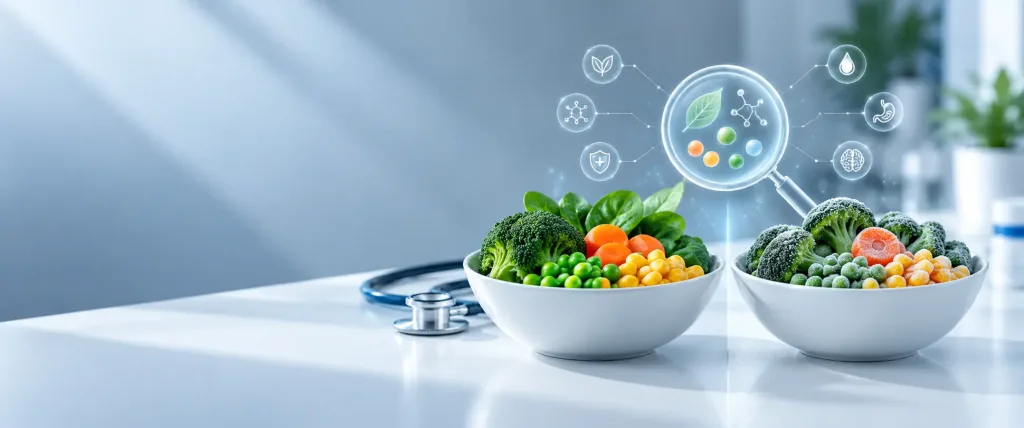
You’re standing in the grocery store, deciding between a bag of frozen broccoli and a bunch of fresh broccoli. The fresh vegetables look more appealing, but the frozen ones are cheaper, easier to store, and already chopped.
Still, a familiar thought crosses your mind: Aren’t fresh vegetables healthier?
It’s a common assumption. We often associate freshness with better nutrition and believe freezing somehow removes the goodness from food.
But here’s something surprising: frozen vegetables can be just as nutritious as fresh ones, and sometimes even more nutritious, depending on how they’re stored.
Research suggests the nutritional differences aren’t always what we expect.
So, before you overlook the frozen food aisle, let’s explore what actually happens to vegetables after harvesting, how freezing affects their nutrients, and which option deserves a place on your plate.
What Happens to Vegetables After They're Harvested?
Vegetables don’t immediately stop changing once they’re picked.
Even after harvesting, natural processes continue. Over time, exposure to oxygen, light, and temperature changes can affect certain nutrients.
Fresh vegetables may spend days being transported, displayed in stores, and stored in your refrigerator before reaching your plate.
During this period, some vitamins gradually decline.
Frozen vegetables follow a different journey.
They’re typically harvested when mature, prepared, and frozen relatively quickly. This slows the chemical reactions responsible for deterioration.
According to the U.S. Department of Agriculture (USDA), freezing helps preserve food quality, although storage conditions and preparation methods still matter.
This explains why vegetables that look fresher aren’t necessarily more nutritious.
Does Freezing Destroy Vitamins and Minerals?
One of the biggest nutrition myths is that freezing destroys most vitamins.
In reality, freezing itself generally preserves nutrients quite well.
However, many commercially frozen vegetables undergo blanching, a brief heating process that slows enzyme activity and helps maintain quality.
Blanching can reduce some heat-sensitive or water-soluble vitamins, particularly vitamin C.
But not every nutrient responds the same way.
Minerals and dietary fiber are generally retained well, while vitamin losses depend on the vegetable, processing conditions, and storage duration.
The important nutrition fact is that neither fresh nor frozen vegetables automatically contain more of every nutrient.
What Does Scientific Research Actually Say?
A 2017 study published in the Journal of Food Composition and Analysis compared nutrients in fresh, frozen, and refrigerated produce.
Researchers also examined fresh produce after five days of refrigeration to reflect typical household storage.
The findings challenged the assumption that fresh produce always offers superior nutrition.
In some cases, frozen produce retained more of certain nutrients than produce stored in the refrigerator for five days.
Another study published in the Journal of Agricultural and Food Chemistry examined vitamin retention in eight fruits and vegetables.
Researchers found that vitamin content was generally comparable between frozen and refrigerated produce, although individual nutrients varied.
For vitamin C, five of eight foods showed no significant difference, while three had higher amounts in frozen samples.
These findings don’t prove frozen vegetables are always better. They show that nutritional value depends on more than whether food is fresh or frozen.
Fresh vs. Frozen Vegetables - A Simple Comparison
| Feature | Fresh vegetables | Frozen vegetables |
|---|---|---|
| Nutritional value | High, especially when consumed soon after harvesting | Often comparable to fresh |
| Vitamin retention | Some vitamins decline during storage | Many nutrients remain well preserved |
| Fiber and minerals | Good sources | Generally well retained |
| Shelf life | Usually shorter | Usually much longer |
| Convenience | May require washing and chopping | Often ready to cook |
| Food waste | May spoil before use | Easier to store in portions |
The comparison reveals something important: choosing vegetables is about nutritional value, convenience, affordability, and how likely you are to eat them.
Are Some Frozen Vegetables Better Than Others?
Different vegetables behave differently during freezing.
Broccoli, peas, spinach, carrots, and green beans are commonly available frozen because they generally tolerate the process well.
However, their nutrient profiles aren’t identical.
For example, the vitamin-retention study found that beta-carotene levels were lower in frozen samples of some vegetables, including carrots and peas.
Other nutrients showed little difference or were better retained in certain frozen products.
This is why broad claims such as “frozen vegetables have more vitamins” can be misleading.
The better approach is to eat a variety of vegetables rather than worrying about finding the single most nutritious version.
Can Frozen Vegetables Support Weight Loss?
Absolutely. Plain frozen vegetables can fit into a balanced eating plan, including a weight loss nutrition diet
Most non-starchy vegetables provide relatively few calories while contributing fiber, water, vitamins, and minerals.
Fiber-rich foods can also support fullness, which may help with appetite management.
However, frozen vegetables don’t have special fat-burning properties.
Their benefit comes from making nutritious meals easier to prepare.
For example, adding frozen vegetables to soup, rice, or an omelet can increase vegetable intake without requiring much preparation.
When planning a healthy weight loss nutrition diet, focus on balanced meals, suitable portions, and sustainable eating habits rather than choosing fresh vegetables exclusively.
What About Frozen Vegetables With Sauces?
Not all frozen vegetable products are nutritionally identical.
Plain frozen broccoli and broccoli covered in cheese sauce may differ significantly in sodium, saturated fat, and calories.
Some frozen vegetable mixes contain added salt, butter, or creamy sauces.
These products can still fit into an overall diet, but checking the ingredients and nutrition label is worthwhile.
For everyday meals, plain frozen vegetables offer greater flexibility because you control the seasoning and added ingredients.
5 Health Tips to Get More Nutrition From Your Vegetables
Small changes in preparation can help preserve nutrients and improve your meals.
Avoid overcooking. Prolonged cooking, particularly in large amounts of water, can reduce certain water-soluble vitamins
Try steaming or microwaving. These methods often require less water and shorter cooking times.
Store frozen vegetables properly. Keep them at approximately −18°C (0°F) or colder to maintain quality.
Add vegetables to everyday meals. Frozen peas, spinach, and mixed vegetables work well in soups, curries, omelets, and stir-fries.
Choose variety over perfection. Eating different vegetables regularly is more important than relying exclusively on fresh or frozen products.
These simple health tips can make nutritious eating easier without adding unnecessary expense or effort.
How Many Vegetables Should You Eat Daily?
The World Health Organization recommends that people older than 10 consume at least 400 grams of fruits and vegetables combined each day.
It also recommends at least 25 grams of naturally occurring dietary fiber daily for this age group.
Importantly, WHO recognizes fresh, frozen, and canned produce as nutritious options, provided products aren’t loaded with added sugar or excessive sodium.
This matters because convenience and affordability can influence whether people eat enough vegetables in the first place.
Having frozen vegetables available may help you include them more regularly, especially on busy days.
Fresh or Frozen, Both Count
So, are frozen vegetables less nutritious than fresh ones?
Not necessarily.
Fresh vegetables can be excellent sources of nutrients, particularly when eaten soon after harvesting. Frozen vegetables can also retain substantial nutritional value and sometimes compare favorably with produce stored for several days.
The biggest difference may come down to how vegetables are processed, stored, and cooked.
Rather than treating fresh and frozen foods as competitors, consider them complementary options.
Fresh vegetables may be ideal for salads and raw dishes, while frozen varieties offer convenience for cooked meals.
Ultimately, good nutrition isn’t about choosing the most expensive or freshest-looking vegetables.
It’s about eating a variety of nutritious foods consistently, in ways that work for your lifestyle.
Medical Disclaimer: This article is for educational purposes only and does not replace professional medical billing or nutritional advice.
Stay Updated
Get weekly RCM insights, trends and expert strategies delivered to your inbox.