
Blood Cancer Symptoms That Are Often Mistaken for Common Illnesses
 Williams Clark

Feeling unusually tired, catching infections more often, or waking up drenched in sweat might not immediately raise concerns about cancer. Most people associate these symptoms with everyday problems such as stress, seasonal infections, or hormonal changes.
And in many cases, they’re right. But what happens when these seemingly ordinary symptoms persist, worsen, or appear without an obvious explanation?
Sometimes, they may be early warning signs of blood cancer, a group of diseases that affect blood cells, bone marrow, or the lymphatic system.
One challenge is that blood cancer symptoms frequently resemble those of much more common illnesses. This can make them difficult to recognize without appropriate medical evaluation.
According to the American Cancer Society, approximately 192,030 new cases of leukemia, lymphoma, and myeloma combined are expected in the United States in 2026.
Understanding which symptoms deserve attention can help people seek medical advice at the right time, without assuming that every unexplained ache or fever is cancer.
What Is Blood Cancer and How Does It Affect the Body?
Blood cancer occurs when certain blood-forming or immune system cells develop abnormal changes that disrupt their normal growth and function.
These cancers may interfere with the body’s ability to fight infections, transport oxygen, or control bleeding.
Unlike cancers that commonly develop as solid tumors, some blood cancers affect cells circulating in the blood or developing within the bone marrow.
There are several blood cancer types, but three major groups are particularly important to understand.
How Does AI Medical Billing Actually Work?
Traditional billing systems use established rules to process claims, calculate balances, and record payments.
Modern AI medical billing software can introduce additional capabilities, including predictive analytics, natural language processing, and automated communication.
For example, AI can analyze insurance information, identify inconsistent patient details, or explain complicated billing terminology in simpler language.
Some systems also use machine learning to identify patterns associated with claim denials or payment delays.
However, not every automated billing tool uses artificial intelligence. A payment reminder sent automatically according to a fixed schedule, for instance, is basic automation rather than necessarily AI.
Understanding that distinction helps healthcare organizations evaluate technology realistically.
The Three Major Blood Cancer Types
| Type | Where It Develops | Common Effects |
|---|---|---|
| Leukemia | Blood-forming tissues, particularly bone marrow | Abnormal blood cell production, infections, anemia, or bleeding |
| Lymphoma | Lymphocytes, a type of immune cell | Enlarged lymph nodes, fever, fatigue, or night sweats |
| Myeloma | Plasma cells within bone marrow | Bone damage, anemia, kidney problems, or infections |
Each blood cancer type has several subtypes, and symptoms can vary depending on the specific condition.
Some forms, such as acute leukemia, may progress quickly, while certain chronic leukemias and slow-growing lymphomas can develop over several years without noticeable symptoms.
Blood Cancer by the Numbers: 2026 Statistics
The American Cancer Society’s Cancer Facts & Figures 2026 provides the following estimates for the United States.
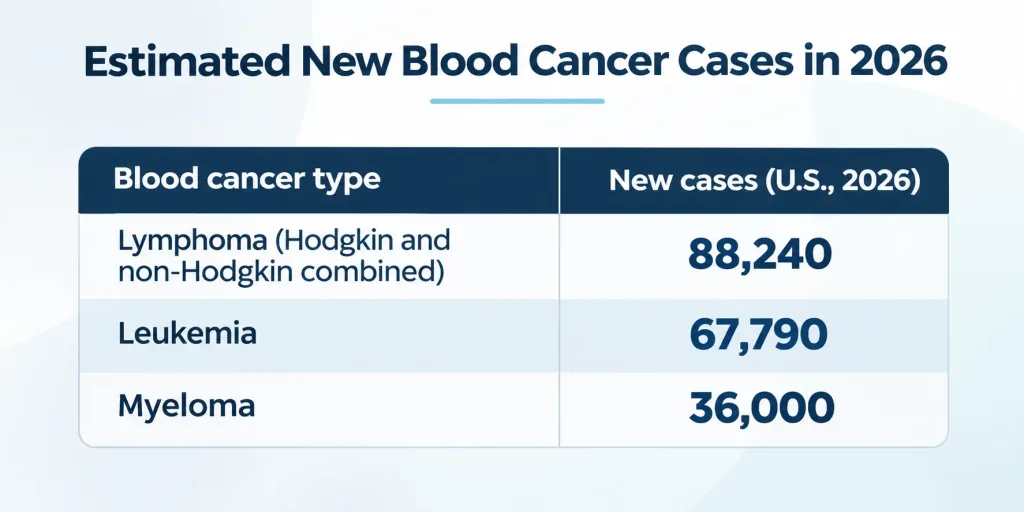
These figures emphasize that blood cancer isn’t one disease with one set of symptoms. Recognizing its different forms is essential to understanding how it may affect the body.
7 Blood Cancer Symptoms Often Mistaken for Common Illnesses
Persistent Fatigue That Feels Like Everyday Exhaustion
Everyone experiences tiredness. Long working hours, poor sleep, and stress can leave anyone feeling drained.
However, blood cancer-related fatigue may be unusually persistent and fail to improve with adequate rest.
Some blood cancers interfere with healthy red blood cell production, causing anemia. When this happens, the body may struggle to transport enough oxygen to its tissues.
You might notice difficulty completing normal activities, unusual weakness, or breathlessness during mild exertion.
Persistent fatigue doesn’t automatically indicate cancer, but it deserves medical evaluation when unexplained or worsening.
Frequent Infections That Seem Like a Weak Immune System
Repeated colds, persistent fevers, or infections that take unusually long to resolve may sometimes be associated with blood cancer.
Certain blood cancers affect white blood cells, which normally protect the body against infections.
Although abnormal white blood cell counts may become elevated, those cells might not function properly.
As a result, the immune system can become less effective.
According to Blood Cancer UK, frequent, persistent, or severe infections are among the recognized blood cancer symptoms.
However, repeated infections have many possible causes, including noncancerous immune conditions and other medical problems.
Unexplained Bruising or Bleeding
Finding a bruise after accidentally bumping into furniture is normal.
But what if bruises appear repeatedly without a remembered injury?
Some blood cancers interfere with platelet production or function. Platelets help blood clot and prevent excessive bleeding.
Possible warning signs include unexplained bruises, frequent nosebleeds, bleeding gums, or small red or purple spots under the skin called petechiae.
These changes can also occur with medications, infections, or other blood disorders.
Nevertheless, unexplained bleeding or widespread bruising warrants prompt medical assessment.
Night Sweats Mistaken for Hormonal Changes
Sweating during sleep can occur because of warm temperatures, menopause, infections or certain medications.
However, repeated night sweats that soak clothing or bedding may be associated with some blood cancers, particularly lymphoma.
These episodes can occur even when the room is cool.
The National Cancer Institute identifies unexplained fever, drenching night sweats and weight loss among symptoms that may occur with lymphoma.
Night sweats alone don’t establish a diagnosis, but they deserve attention when persistent or accompanied by other unexplained changes.
Swollen Lymph Nodes That Resemble an Infection
Lymph nodes are small structures that help your immune system respond to infections.
They commonly become swollen during illnesses such as sore throats or respiratory infections.
However, certain blood cancer types, particularly lymphoma, can also cause enlarged lymph nodes.
These may appear as lumps in the neck, armpits, or groin.
Cancer-related lymph node swelling is often painless, although this isn’t a reliable way to distinguish it from other causes.
A lump that persists, enlarges, or appears without a clear explanation should be evaluated.
Unexplained Weight Loss or Reduced Appetite
Losing weight without dieting may initially seem harmless.
However, unintended weight loss can sometimes indicate an underlying medical condition, including blood cancer.
Some cancers affect metabolism, appetite, and how the body uses energy.
You may notice clothes becoming looser, reduced appetite, or feeling full sooner than usual.
Persistent unexplained weight loss should be discussed with a healthcare professional, particularly when accompanied by fatigue, fever or night sweats.
Bone or Joint Pain Mistaken for Aging or Arthritis
Bone pain isn’t always caused by injury, arthritis, or aging.
In multiple myeloma, abnormal plasma cells can damage bones and increase the risk of fractures.
Pain may occur in the back, ribs, hips, or other areas.
Some people also develop muscle weakness or other complications related to abnormal calcium levels.
Persistent bone pain, especially when accompanied by unusual fatigue or weakness, should be assessed rather than repeatedly dismissed.
When Do Common Symptoms Become Concerning?
The challenge with blood cancer symptoms is that they are rarely unique to cancer.
A fever is usually caused by something other than leukemia. Fatigue may result from anemia, sleep problems, or numerous other conditions.
Instead of focusing on one symptom, doctors consider its duration, severity, progression, accompanying signs, and medical history.
| Common Symptom | When to Seek Medical Advice |
|---|---|
| Fatigue | Persistent, worsening or unexplained |
| Infections | Frequent, severe or slow to resolve |
| Bruising | Appears repeatedly without an obvious cause |
| Night Sweats | Repeatedly drench clothing or bedding |
| Swollen Lymph Nodes | Persist, enlarge or occur without an apparent infection |
| Weight Loss | Unintentional and continuing |
| Bone Pain | Persistent, worsening or unexplained |
Can a Blood Test for Cancer Detect These Conditions?
One of the most common questions is whether a routine blood test can identify blood cancer.
The answer depends on the cancer type.
A complete blood count (CBC) measures red blood cells, white blood cells, platelets, and hemoglobin.
An abnormal CBC may provide important clues, particularly in leukemia.
However, a blood test for cancer cannot reliably diagnose every blood cancer or rule one out.
According to the National Cancer Institute, additional investigations may include a peripheral blood smear, bone marrow testing, imaging, or a lymph node biopsy.
For lymphoma, a tissue biopsy is often essential to establish the diagnosis.
For multiple myeloma, doctors may order specialized blood and urine tests to identify abnormal proteins, alongside other investigations.
A normal routine blood test does not guarantee that blood cancer is absent.
Why Early Medical Evaluation Matters
Some blood cancers develop slowly, while others progress rapidly and require urgent treatment.
The appropriate treatment depends on the exact diagnosis, disease characteristics, symptoms, and overall health.
Options may include chemotherapy, targeted therapies, immunotherapy, stem cell transplantation, or careful monitoring for selected slow-growing cancers.
Recognizing possible blood cancer symptoms can prompt timely investigation, but identifying the specific disease is essential before treatment decisions are made.
Know When Something Isn't Normal
Most episodes of fatigue, fever, bruising, or swollen lymph nodes are not caused by blood cancer.
Still, persistent or unexplained changes deserve attention.
Understanding the differences between blood cancer types and recognizing symptoms that resemble common illnesses can help you have more informed conversations with healthcare professionals.
The goal isn’t to fear every symptom. It’s to recognize when something unusual deserves a closer look.
Better Care Deserves Better Billing.
Great patient care requires strong operational support. Medmax RCM provides medical billing, coding, and revenue cycle management services to help practices manage their financial workflows efficiently.
Discover Medmax RCM.
Stay Updated
Get weekly RCM insights, trends and expert strategies delivered to your inbox.