
Why Does One Diet Work for Some People but Not Others?
 Jessica Collins

Your friend starts the keto diet and loses weight within weeks. Inspired by their success, you try the same diet, follow similar meals, and avoid the same foods. But your results are completely different.
Meanwhile, someone else eats carbohydrates regularly, follows no strict diet, and maintains a healthy weight.
So, what’s happening? Why can the same diet produce such different results?
The answer is more interesting than simply having a fast or slow metabolism.
Our bodies differ in genetics, hormones, digestive processes, health conditions, and daily energy needs. Even our lifestyles influence how we respond to food.
Understanding these differences can help explain why no single diet works equally well for everyone.
Is There Really One Best Diet for Everyone?
With so many types of diets available, choosing the right one can feel confusing.
The Mediterranean diet emphasizes vegetables, whole grains, healthy fats, and fish. Keto restricts carbohydrates, while intermittent fasting focuses on when you eat.
Each approach has its own structure, but research suggests that no single diet consistently produces the best results for everyone.
A Stanford University study published in JAMA followed 609 adults assigned to healthy low-fat or healthy low-carbohydrate diets.
After 12 months, the average weight loss was:
Low-Fat vs. Low-Carb Diet: What Research Found
Average weight loss after 12 months, DIETFITS study
The difference was not statistically significant. Individual results varied widely within both groups.
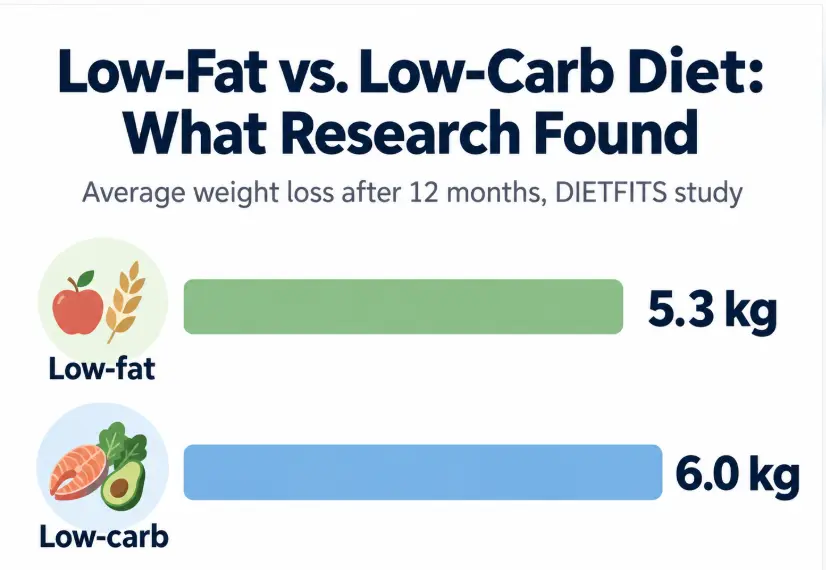
The interesting finding wasn’t simply which group lost more weight. It was that people following the same approach experienced considerably different outcomes.
Let’s explore why.
Your Metabolism Isn't Exactly Like Anyone Else's
Metabolism describes the processes your body uses to convert food into energy.
Your daily energy requirements depend on several factors, including age, body size, muscle mass, physical activity, and health.
For example, someone with greater muscle mass may use more energy at rest than someone with less muscle mass.
This means two people eating identical meals might have different energy balances.
However, metabolism isn’t a mysterious switch that determines whether a diet succeeds. Total energy intake, daily movement, and consistency still matter.
Genetics May Influence Your Response to Food
Have you ever wondered whether your DNA could tell you which diet to follow?
Researchers are studying how genetic differences influence appetite, metabolism, and responses to certain nutrients.
But genetic testing cannot currently identify one perfect weight-loss diet for most people.
In the Stanford DIETFITS study, researchers examined whether selected genetic patterns could predict better results from low-fat or low-carbohydrate diets.
They found no significant evidence that those genetic patterns identified which diet would work better.
Genetics may influence health and nutritional needs, but diet quality and sustainable habits remain important.
Your Gut Bacteria May Play a Role
Your digestive system contains trillions of microorganisms, collectively known as the gut microbiome.
These microorganisms help process certain food components and produce substances that interact with the body.
Interestingly, gut microbiome composition varies between individuals.
Research suggests these differences may help explain why people experience different blood sugar responses after eating similar foods.
However, scientists are still investigating how microbiome information could improve personalized diets.
For now, eating a varied selection of fiber-rich foods is a more established approach than purchasing expensive microbiome-based diet plans.
Can Your Blood Type Determine the Best Diet?
One popular theory suggests that your blood group should influence what you eat.
Known as the blood type diet, this approach recommends different foods for people with blood types A, B, AB, and O.
For example, some versions recommend higher-protein eating for blood type O and predominantly plant-based eating for blood type A.
But does choosing food according to your blood type actually improve health?
A systematic review published in the American Journal of Clinical Nutrition examined scientific evidence supporting blood type diets.
The researchers found no evidence validating their claimed health benefits.
Therefore, using your blood type for diet selection isn’t supported by reliable scientific evidence.
Someone may benefit from a blood type diet because it encourages healthier food choices, not because those foods match their blood group.
Health Conditions Can Change Dietary Needs
A diet that supports one person’s health may be unsuitable for someone managing a particular medical billing condition.
For example, people with type 2 diabetes often need to consider how meals influence blood glucose levels.
When searching for a diet type 2 diabetes patients can follow, there’s no single eating plan that works for everyone.
The American Diabetes Association emphasizes individualized nutrition plans based on health goals, food preferences, and metabolic needs.
Similarly, people with kidney disease, food allergies, or digestive disorders may need specific dietary adjustments.
This is why copying someone else’s meal plan without considering your health can sometimes be unhelpful or even unsafe.
Lifestyle Matters More Than You Think
Imagine two people following identical diets.
One sleeps adequately, walks regularly, and has time to prepare meals.
The other works irregular hours, experiences ongoing stress, and struggles to maintain a consistent eating schedule.
Their experiences may be very different.
Sleep, physical activity, medication use, working hours, and access to nutritious foods can all influence appetite, food choices, and weight management.
A successful diet must fit your actual lifestyle, not just look impressive on paper.
Comparing Popular Types of Diets
Different eating patterns can serve different purposes.
| Diet type | Main approach | Important consideration |
|---|---|---|
| Mediterranean | Whole grains, vegetables, fish, olive oil | Flexible, with evidence supporting heart health |
| Keto | Very low carbohydrate intake | Restrictive and may require medical supervision |
| DASH | Fruits, vegetables, whole grains, lower sodium | Designed to support blood pressure management |
| Intermittent fasting | Structured eating and fasting periods | Not suitable for everyone |
| Blood type diet | Claimed benefits lack scientific validation | Plant-based |
| Physical inactivity | Emphasizes plant-derived foods | Requires attention to nutrients such as B12 |
The best choice depends on individual needs, nutritional adequacy, medical circumstances, and whether the eating pattern can be maintained.
How Can You Find a Diet That Works for You?
Instead of asking which diet produces the fastest results, consider which approach supports your health over time.
Start by identifying your goals. Are you trying to manage weight, improve blood sugar, lower cholesterol, or simply develop healthier habits?
Then evaluate whether the diet provides adequate protein, fiber, vitamins, minerals, and energy.
Choose foods you enjoy and can afford, and avoid unnecessarily restrictive rules.
If you have a medical condition, consult a qualified healthcare professional or registered dietitian before making major dietary changes.
Most importantly, remember that a sustainable diet is more valuable than one you can tolerate for only a few weeks.
Final Thoughts
Different diets work differently because people have different bodies, medical needs, and lifestyles.
Genetics, metabolism, gut bacteria, and daily habits may all influence individual responses, but none provides a simple formula for guaranteed results.
Rather than constantly switching between popular types of diets, focus on finding a nutritious, practical eating pattern that fits your circumstances.
The most effective diet isn’t necessarily the trendiest one. It’s one that supports your health and that you can realistically maintain.
Medical Disclaimer: This article is for educational purposes only and does not replace professional medical or nutritional advice.
Stay Updated
Get weekly RCM insights, trends and expert strategies delivered to your inbox.