
How AI Is Changing Medical Billing for Healthcare Providers
 Emily Thompson
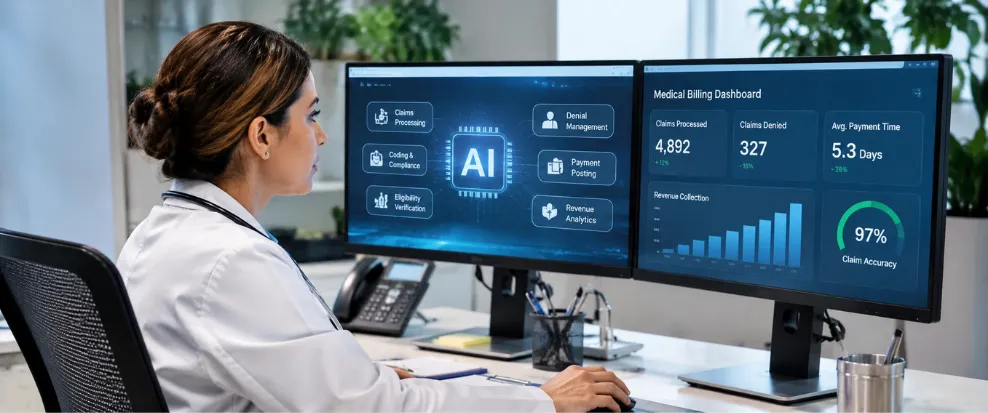
Medical billing involves more than creating and submitting claims. Healthcare providers must manage patient information, verify insurance coverage, assign accurate medical codes, follow payer requirements, and track payments. These tasks can become time-consuming when handled manually. AI medical billing is changing how healthcare organizations manage these responsibilities by helping teams process information, identify errors, and automate repetitive work.
Artificial intelligence (AI) can support different stages of the billing process, from insurance verification to claim review and denial management. It can also help billing teams recognize patterns in claim data and make more informed decisions. However, AI does not eliminate the need for trained billing professionals. Human oversight remains essential for accurate coding, compliance, and complex billing decisions.
Understanding how this technology works can help healthcare providers determine where AI may improve their billing operations and which solutions are worth considering.
What Is AI Medical Billing and How Does It Work?
AI medical billing uses artificial intelligence technologies to assist with healthcare billing and revenue cycle management tasks. These systems can analyze information from patient records, clinical documentation, insurance policies, and previous claims to help billing teams complete work more efficiently.
For example, an AI-powered system may review clinical documentation and suggest possible medical codes. It may also identify missing patient information, flag potential claim errors, or help staff recognize claims that need additional attention.
AI medical billing commonly uses several technologies:
- Machine learning: Analyzes historical data to identify patterns and support predictions, such as which claims may have a higher risk of denial.
- Natural language processing (NLP): Helps systems interpret information in clinical notes and other text-based documents.
- Generative AI: Can assist with summarizing documentation, drafting communications, and organizing information for review.
- Optical character recognition (OCR): Extracts information from scanned documents, forms, and insurance cards.
Traditional billing workflows often depend on staff manually reviewing records and entering information. AI-supported workflows can automate selected tasks and highlight information that needs human attention. The goal is not to replace billing professionals but to help them spend less time on repetitive work and more time resolving complex issues.
How AI Is Transforming the Medical Billing Process
AI can support multiple stages of the medical billing process. Its usefulness depends on the quality of available data, system integration, payer requirements, and the level of human review.
Patient Registration and Data Entry
Accurate patient information is essential for successful claim processing. Incorrect names, dates of birth, insurance details, or policy numbers can create problems later in the billing process.
AI-powered tools can extract information from registration forms and insurance documents, compare available records, and flag missing or inconsistent details. This helps staff identify potential errors before claims are created.
For example, if a patient’s insurance information does not match the information in the billing system, the software can alert the registration team to review it.
Insurance Eligibility and Benefits Verification
Before providing services, healthcare providers need to confirm whether a patient’s insurance coverage is active and understand the applicable benefits.
AI-supported verification tools can help retrieve and organize eligibility information, including coverage details, copayments, deductibles, and other patient responsibilities. Depending on the system and payer connectivity, they may also flag missing information or coverage inconsistencies.
However, eligibility verification does not guarantee that a particular service will be covered or paid. Staff must still review payer requirements and confirm important details.
Medical Documentation and Charge Capture
Charge capture involves recording the services, procedures, and supplies provided to a patient so they can be accurately reflected in the claim.
Missing charges or incomplete documentation can lead to billing delays and lost reimbursement opportunities.
AI tools can compare clinical documentation with recorded services and identify possible gaps. They may flag missing details, inconsistent entries, or charges that require further review.
For example, if documentation refers to a service that does not appear in the charge record, the system can alert the billing team to investigate before claim submission.
Medical Coding and Medical Necessity Checks
Medical coding translates documented diagnosis, procedures, and services into standardized codes used for billing and reporting.
AI can assist coders by reviewing clinical notes, identifying relevant documentation, and suggesting potential ICD-10-CM, CPT, or HCPCS codes. It can also flag missing information or possible inconsistencies.
Some systems can support medical necessity checks by comparing documented services with relevant payer policies and coverage requirements.
However, AI-generated coding suggestions are not automatically correct. Qualified coding professionals must verify code selection, documentation support, applicable guidelines, and payer-specific requirements.
Prior Authorization and Claim Preparation
Some healthcare services require prior authorization before they are provided. Missing or incomplete authorization information can create reimbursement problems.
AI-supported workflows can help organize authorization requests, identify missing documentation, and track authorization status when connected systems provide the necessary information.
Before submission, AI can also help gather relevant patient, provider, diagnosis, procedure, and insurance details for claim preparation.
Automated Claim Scrubbing and Submission
Claim scrubbing involves checking claims for errors and missing information before they are sent to insurance companies.
AI-powered claim review tools can help identify issues such as:
- Missing patient or insurance details.
- Inconsistent diagnosis and procedure information.
- Potential coding errors.
- Missing authorization details.
- Incomplete claim documentation.
- Possible payer-specific billing issues.
These alerts give billing teams an opportunity to correct problems before submission. Some platforms also support automated claim submission after configured checks and required approvals are completed.
Denial Management and Appeals
A denied claim can delay payment and require additional administrative work. Billing teams must identify the reason for denial, correct the issue, and determine whether an appeal or resubmission is appropriate.
AI can organize denial information, group claims by denial reason, and identify recurring patterns. Predictive tools may also flag claims with characteristics associated with a higher denial risk.
For example, if several claims are rejected because of missing authorization information, the system may help the team identify the recurring issue and improve its verification process.
AI can also assist with preparing appeal documentation, but staff should review the facts, supporting records, deadlines, and payer requirements before sending an appeal.
Payment Posting and Underpayment Detection
After an insurer processes a claim, payment information must be recorded and compared with the expected reimbursement.
AI-supported tools can help extract payment details from electronic remittance advice (ERA) documents, match payments to claims, and flag discrepancies.
They may also help identify possible underpayments by comparing actual payments with expected amounts based on available contract and reimbursement data.
These findings still require review because payment calculations depend on contract terms, adjustments, patient responsibility, and payer-specific rules.
Patient Billing and Payment Support
Billing communication does not end when an insurance claim is processed. Patients may need explanations of their statements, outstanding balances, or payment options.
AI-powered chatbots and communication tools can help answer routine billing questions, provide basic account information, and direct patients to the appropriate support team.
Sensitive account details should only be shared through secure, properly authenticated systems. Complex billing disputes and financial concerns should be handled by qualified staff.
Key Benefits of AI in Medical Billing
When implemented appropriately, AI can help healthcare providers improve different parts of their billing operations.
Faster Claims Processing
Automating repetitive data entry, document review, and claim checks can reduce the time staff spend on routine tasks. This may help billing teams process claims more efficiently and focus on issues that require attention.
Improved Coding Accuracy
AI-assisted coding tools can identify relevant information in clinical documentation and flag possible inconsistencies. When qualified professionals review these suggestions, they can support a more consistent coding process.
Reduced Claim Denials
Pre-submission checks can help identify missing information, coding issues, and other potential problems. Addressing these issues before submission may reduce avoidable denials, although results depend on implementation and payer requirements.
Lower Administrative Workload
Automating selected tasks, such as document extraction, eligibility checks, and payment matching, can reduce repetitive manual work. Staff can then spend more time on complex claims, appeals, and patient support.
Better Revenue Cycle Visibility
AI-powered reporting can help organizations identify trends in claim status, payment delays, denial reasons, and outstanding balances. These insights can support better operational decisions.
More Efficient Billing Operations
By bringing together information from different stages of the billing process, AI tools can help teams identify bottlenecks and prioritize work. This can make daily billing operations easier to manage.
AI Medical Billing Software: Features to Look For
Choosing the right AI medical billing software requires more than comparing automation features. Healthcare providers should consider how a platform fits their existing workflows, protects patient information, and supports accurate billing.
Important features include:
Automated Medical Coding
Look for tools that can review clinical documentation, suggest relevant codes, and highlight missing or conflicting information. The platform should allow qualified coding professionals to review and approve coding decisions.
Real-Time Insurance Verification
A useful solution should support eligibility checks and organize coverage information, including copayments, deductibles, and policy details. Verify which payers and data connections the software actually supports.
AI-Powered Claim Scrubbing
Claim review features should identify missing information, possible coding inconsistencies, and payer-specific issues before submission. Check whether users can understand why an issue was flagged.
Denial Prediction and Management
Some platforms analyze historical claim data to identify potential denial risks. Look for denial categorization, work queues, reporting, and tools that help staff investigate recurring problems.
EHR and Practice Management Integration
The software should work with the organization’s existing electronic health record (EHR), practice management, and billing systems. Poor integration can create duplicate data entry and workflow problems.
Reporting and Revenue Analytics
Useful reporting features may include claim status, denial trends, payment performance, accounts receivable, and reimbursement information. Reports should be clear enough for billing managers to act on.
HIPAA Compliance and Data Security
Healthcare organizations should evaluate how a vendor protects electronic protected health information (ePHI). Review access controls, encryption, audit logs, data handling practices, and applicable contractual requirements.
A software provider’s statement that its product is secure should not replace an independent review of its security and compliance arrangements.
How AI Improves Insurance Benefit Verification
Insurance benefit verification helps healthcare providers understand a patient’s coverage and financial responsibilities before services are delivered. AI can make parts of this process more organized by collecting information, identifying missing details, and helping staff review coverage.
When evaluating the top AI solutions for benefit verification in medical billing, consider the following capabilities:
Automated Eligibility Checks
The system should help verify whether coverage is active and organize the returned eligibility information. Check whether it supports the payers and insurance plans commonly used by your organization.
Copay, Deductible and Coverage Verification
A useful platform should make it easier to review available benefit information, including copayments, deductibles, coinsurance, and coverage limitations.
Prior Authorization Support
Some tools can help identify services that may require authorization, organize supporting documentation, and track request status. Confirm whether the platform retrieves actual authorization requirements or simply provides alerts based on configured rules.
Identifying Insurance Data Errors
AI can flag inconsistent member details, missing policy information, and incomplete verification records. Staff can review these alerts before the patient receives services.
Evaluating Benefit Verification Solutions
Before selecting a platform, compare payer connectivity, verification speed, accuracy, integration options, security, reporting and the amount of manual work still required.
AI Applications in Specialized Medical Billing
Different medical specialties have different documentation, coding, authorization, and reimbursement requirements. AI tools can support these workflows, but the software must be configured for the relevant specialty.
AI for Behavioral Health Billing Support
Behavioral health billing involves services such as psychotherapy, psychiatric evaluations, and other mental health treatments. Accurate documentation, service details, provider credentials, and payer requirements are important.
Behavioral health billing support AI may help with:
- Organizing clinical documentation for billing review.
- Flagging missing service or session details.
- Supporting code suggestions based on documented services.
- Identifying possible claim inconsistencies.
- Tracking recurring denial reasons.
AI should not independently determine a diagnosis, create unsupported documentation, or replace a qualified professional’s judgment. Billing teams must verify that claims accurately reflect the services provided.
AI Medical Billing for Infusion Services
Infusion billing can involve complex documentation and coding requirements related to medications, administration services, quantities, units, and authorization.
AI medical billing for infusion may help providers by:
- Reviewing infusion records for missing information.
- Flagging possible inconsistencies in drug quantities and units.
- Supporting drug and administration coding review.
- Checking authorization information against available records.
- Identifying claim details that need additional verification.
These tools can help organize complex billing information, but staff must confirm applicable coding rules, documentation, payer policies, and reimbursement requirements.
Challenges and Risks of AI in Medical Billing
AI can improve selected billing workflows, but it also introduces risks that healthcare organizations need to manage.
Incorrect AI-Generated Coding Suggestions
AI systems may misunderstand clinical language, overlook important documentation, or suggest codes that do not accurately represent a service. Human review is necessary before coding decisions are finalized.
Patient Data Privacy and HIPAA Compliance
AI billing tools may process sensitive patient and financial information. Healthcare providers should review vendor security practices, data access permissions, encryption, audit capabilities, and applicable HIPAA obligations.
Integration With Existing Billing Systems
A platform that does not integrate properly with EHR or practice management software can create duplicate records and additional work. Providers should test data exchange and workflow compatibility before full implementation.
Incomplete or Biased Data
AI performance depends partly on the quality of the information used by the system. Incomplete, outdated, or unrepresentative data can lead to unreliable suggestions and predictions.
Human Oversight and Billing Accountability
AI outputs should not be accepted without review. Healthcare providers need clear processes that define who approves coding, verifies claims, handles exceptions, and takes responsibility for final billing decisions.
How to Implement AI in a Medical Billing Workflow
A successful implementation starts with identifying real operational problems rather than adopting AI simply because the technology is available.
Identify Repetitive Billing Tasks
Review the current billing workflow and identify tasks that consume significant staff time. Common starting points include data entry, eligibility checks, claim review, payment posting, and denial categorization.
Evaluate AI Medical Billing Software
Compare platforms based on their actual capabilities, specialty requirements, payer connections, reporting, and support. Request demonstrations using workflows similar to your organization’s daily operations.
Check Integration and Security Requirements
Confirm that the software can exchange information with existing systems. Review security controls, vendor responsibilities, data retention practices, and relevant compliance requirements.
Train Billing Teams
Staff should understand how the software works, how to review AI suggestions, and when to escalate an issue. Training should include examples of incorrect outputs and procedures for correcting them.
Monitor and Optimize Performance
Begin with a limited workflow or department. Compare results before and after implementation, review errors, collect staff feedback, and adjust the process before expanding AI use across the organization.
How to Measure AI Medical Billing Performance
Healthcare providers need measurable results to determine whether AI is improving billing operations. Compare performance before and after implementation using consistent reporting periods and definitions.
| Performance metric | What it measures |
|---|---|
| Clean Claim Rate | Percentage of claims accepted without errors during initial processing |
| Claim Denial Rate | Percentage of claims denied by payers |
| First-Pass Acceptance Rate | Percentage of claims accepted on their first submission |
| Days in Accounts Receivable | Average time required to collect outstanding payments |
| Cost to Collect | Expense associated with collecting healthcare payments |
| Underpayment Rate | Frequency or value of payments below expected reimbursement |
| Claim Processing Time | Time required to complete defined billing tasks |
The Future of AI in Medical Billing
AI is likely to play a growing role in healthcare billing as organizations improve their data systems and connect more administrative workflows.
Predictive analytics may help billing teams identify claims that need attention before submission. AI agents may assist with multi-step administrative tasks, such as gathering information, organizing work queues, and preparing records for staff review.
Improved connections between EHR platforms, billing systems, and insurance data sources may also reduce manual information exchange. Patient-facing tools could make billing statements easier to understand and help patients find answers to routine questions.
However, progress will depend on reliable data, secure technology, clear accountability, and appropriate human oversight. Healthcare providers will need to evaluate each application based on its actual performance rather than assuming that every AI feature delivers the same results.
Final Thoughts
AI is changing medical billing by helping healthcare providers manage repetitive tasks, review claims, organize insurance information, and identify potential billing problems. From patient registration and medical coding to denial management and payment tracking, it can support several stages of the revenue cycle.
The most effective approach is not to automate every decision. Healthcare organizations should choose tools that address specific workflow challenges, integrate with existing systems, protect patient information, and keep qualified professionals involved in important billing decisions.
With careful implementation and ongoing performance monitoring, AI can become a useful part of a more organized and efficient medical billing process.
Stay Updated
Get weekly RCM insights, trends and expert strategies delivered to your inbox.