
What Is Trauma? Understanding Its Signs, Causes and Lasting Effects
 Williams Clark

Not every painful experience leaves a visible scar. Sometimes, the effects of a difficult event appear in unexpected ways: trouble sleeping, feeling constantly on edge, withdrawing from people, or reacting strongly to situations that once felt ordinary.
These changes can be confusing, especially when the event happened months or even years ago.
This raises an important question: What is trauma, and how can it continue affecting someone long after a difficult experience has ended?
Trauma is more common than many people realize. According to the World Health Organization (WHO), approximately 70% of people worldwide experience at least one potentially traumatic event during their lifetime.
However, experiencing trauma doesn’t automatically mean someone will develop a mental health condition.
Understanding the trauma definition, recognizing possible effects, and knowing when a trauma test or professional assessment may be helpful can make these experiences easier to understand.
What Is Trauma? Understanding the Medical Definition
In healthcare, the word trauma can refer to physical injury or psychological and emotional harm. This article focuses primarily on psychological trauma.
The Substance Abuse and Mental Health Services Administration (SAMHSA) describes trauma as an experience involving physical or emotional harm, or a threat to life, that has lasting negative effects on a person’s well-being or ability to function.
Simply put, psychological trauma occurs when an overwhelming experience continues to affect how someone feels, thinks, or responds to the world.
A person might experience trauma after a serious accident, violence, abuse, natural disaster, or another deeply distressing situation.
But two people can experience the same event and respond differently.
One may gradually recover with support, while another may experience persistent fear, distress, or difficulties in everyday life.
This difference is why the trauma definition considers not only what happened but also how the individual experienced it and its lasting effects.
How Common Is Trauma? What the Research Says
Traumatic experiences affect people across different ages, backgrounds, and communities.
The WHO’s September 2026 PTSD fact sheet provides important global estimates.
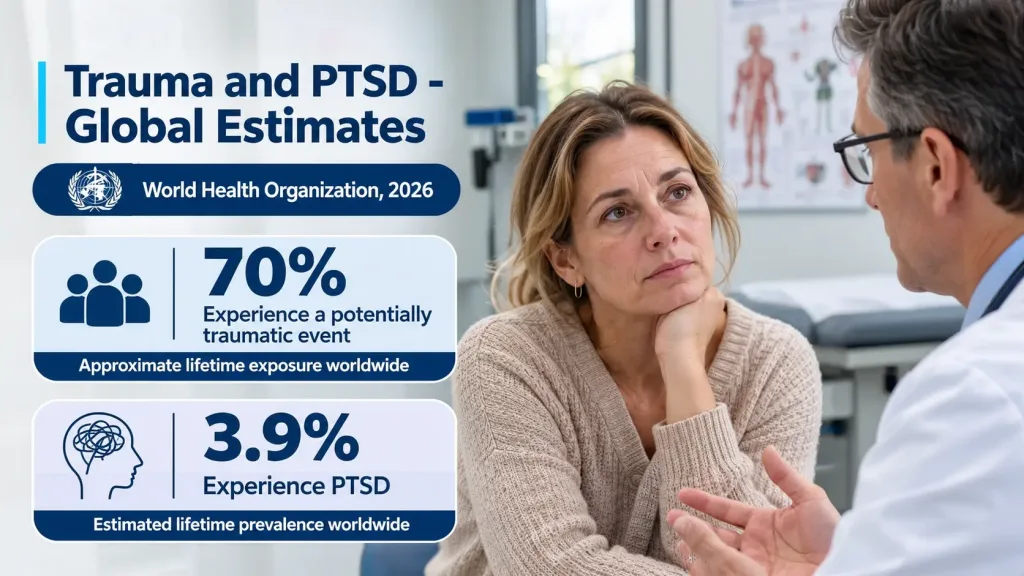
The important distinction is that trauma exposure and post-traumatic stress disorder (PTSD) are not the same thing.
Many people experience distress after traumatic events but recover without developing PTSD.
Others may experience emotional or physical difficulties that require professional support.
What Are the Different Types of Trauma?
Trauma isn’t always associated with one dramatic event. It may result from a single incident, repeated experiences, or ongoing circumstances.
| Type of Trauma | Description | Common Examples |
|---|---|---|
| Acute trauma | Develops after experiencing a single distressing or overwhelming event. | Car accidents, physical assault, or natural disasters |
| Chronic trauma | Results from repeated or prolonged exposure to stressful or harmful experiences. | Ongoing abuse, domestic violence, or repeated bullying |
| Complex trauma | Develops through exposure to multiple or repeated traumatic experiences, often involving relationships or situations where escape feels difficult. | Childhood neglect, prolonged abuse, or repeated interpersonal violence |
| Secondary trauma | Occurs when someone experiences emotional distress through repeated indirect exposure to another person's traumatic experiences. | Healthcare workers, therapists, or emergency responders exposed to traumatic stories |
7 Signs That Trauma May Be Affecting Your Life
Trauma can influence emotions, thoughts, behaviors, relationships, and physical well-being.
The National Institute of Mental Health (NIMH) identifies several possible trauma-related reactions, including distressing memories, avoidance, sleep problems, and increased alertness.
Feeling Constantly on Edge
Some people experience a persistent sense of danger even when they’re physically safe.
They may become unusually alert, easily startled, or uncomfortable in unfamiliar environments.
This heightened state of awareness is sometimes called hypervigilance.
Unwanted Memories or Nightmares
Distressing memories may return unexpectedly through intrusive thoughts, nightmares, or flashbacks.
Certain sounds, places, or situations can remind someone of the original experience.
These reactions can feel intense even when the event occurred long ago.
Avoiding People or Situations
Avoidance is another possible trauma response.
Someone may stop visiting particular places, discussing certain subjects, or participating in activities associated with painful memories.
Although avoidance may temporarily reduce distress, it can sometimes interfere with daily life.
Changes in Mood and Emotions
Trauma can sometimes be associated with irritability, sadness, anxiety, emotional numbness, or feelings of guilt.
Some individuals find it difficult to experience pleasure or connect emotionally with others.
These changes can also occur with other mental health conditions.
Difficulty Sleeping or Concentrating
Persistent stress reactions may interfere with restful sleep, attention, or memory.
Someone may struggle to concentrate at work, feel exhausted during the day, or experience recurring sleep disturbances.
Physical Discomfort Without an Obvious Explanation
Psychological distress can sometimes be accompanied by headaches, muscle tension, digestive discomfort, or other physical complaints.
However, unexplained physical symptoms should also be medically assessed rather than automatically attributed to trauma.
Difficulty Trusting or Connecting With Others
Some traumatic experiences affect a person’s sense of safety in relationships.
They may become more withdrawn, struggle with trust or find certain social situations uncomfortable.
Not everyone experiences these changes and their presence alone cannot establish a trauma-related diagnosis.
Can You Take a Trauma Test?
People sometimes search for an online trauma test when trying to understand unexplained emotional or behavioral changes.
But can a questionnaire determine whether someone has trauma?
Not exactly.
Trauma screening tools can help identify experiences or symptoms that may require further evaluation. They cannot independently establish a diagnosis.
For example, the U.S. Department of Veterans Affairs uses the Primary Care PTSD Screen for DSM-5 (PC-PTSD-5).
This screening tool asks about exposure to traumatic events and includes five questions about possible PTSD symptoms.
A positive screening result indicates that further assessment may be appropriate, not that the person definitely has PTSD.
A professional assessment considers symptoms, their duration, functional impact, and relevant medical history.
For readers considering a trauma test, the most important point is that online results should never replace clinical evaluation.
How Is Trauma Different From PTSD?
Although trauma and PTSD are frequently discussed together, they have different meanings.
Trauma describes a harmful experience and its potential effects. PTSD is a specific mental health condition that can develop following certain traumatic events.
PTSD involves symptoms such as intrusive memories, avoidance, negative changes in mood or thinking, and heightened reactions to potential danger.
For a PTSD diagnosis, symptoms must persist for more than one month and cause significant distress or difficulties in daily functioning.
Not everyone who experiences trauma develops PTSD.
Can People Recover From Trauma?
Yes. Many people recover from traumatic experiences, and effective treatments are available for those experiencing persistent difficulties.
The WHO identifies trauma-focused cognitive behavioral therapy and eye movement desensitization and reprocessing (EMDR) among evidence-based psychological treatments for PTSD.
Professional support may help individuals understand their reactions, manage distress, and gradually rebuild confidence in everyday activities.
Supportive relationships, adequate sleep, regular physical activity, and healthy coping strategies may also support well-being.
However, these habits aren’t substitutes for treatment when significant symptoms persist.
Recovery looks different for everyone and doesn’t follow a fixed timeline.
When Should You Seek Professional Help?
Consider contacting a qualified mental health professional if distressing memories, fear, avoidance, or emotional changes persist, worsen, or interfere with relationships, work, or daily activities.
You don’t need to wait until symptoms become severe to ask for support.
If someone is in immediate danger or experiencing thoughts of self-harm, emergency or crisis services should be contacted promptly.
Understanding Trauma Is the First Step
Trauma can affect people in ways that aren’t immediately visible, and its effects may differ considerably between individuals.
Understanding what trauma is, recognizing possible warning signs, and knowing the limitations of a trauma test can encourage more informed conversations about mental health.
Most importantly, experiencing trauma doesn’t mean that someone will necessarily develop PTSD or experience lifelong difficulties. With appropriate support, understanding, and evidence-based care when needed, recovery is possible.
Running a Mental Health Practice?
Medmax RCM delivers specialized mental health billing and revenue cycle management services to support efficient operations and consistent reimbursement processes.
Explore Our Services
Stay Updated
Get weekly RCM insights, trends and expert strategies delivered to your inbox.