
Can Exercise Really Improve Your Mental Health? 7 Activities Worth Trying
 Williams Clark

A difficult day can leave you feeling mentally exhausted, even when you haven’t done much physical activity. Your thoughts may feel overwhelming, concentration becomes harder and everyday tasks can require more effort than usual.
One simple way to support your mental well-being may be to get your body moving.
Exercise is commonly associated with stronger muscles, weight management, and better cardiovascular health. However, its benefits extend beyond physical fitness. Research suggests that regular physical activity can help improve mood, reduce feelings of anxiety, support better sleep and ease symptoms of depression.
According to the World Health Organization (WHO), physical activity offers important mental health benefits. Yet approximately 31% of adults worldwide do not meet recommended physical activity levels.
So, can exercise really improve your mental health? Which activities are worth trying and how much movement do you need to experience the benefits?
Let’s explore what research says and how different forms of exercise can support emotional well-being.
How Does Exercise Affect Mental Health?
Your brain and body are constantly communicating. Physical activity influences this relationship through biological and psychological processes that can support emotional well-being.
Exercise affects neurotransmitter systems involved in mood regulation and helps the body manage stress responses. It can also support brain health, improve sleep quality, and provide a sense of accomplishment.
Some important ways exercise may influence mental health include:
- Supports mood regulation: Physical activity influences brain chemicals involved in mood and emotional responses.
- Helps manage stress: Movement can provide a break from daily pressures and help regulate the body’s stress response.
- Supports better sleep: Regular physical activity can improve sleep quality, which plays an important role in emotional well-being.
- Improves self-confidence: Reaching realistic fitness goals can create a sense of achievement and personal progress.
- Encourages social connection: Group activities, walking with friends, and fitness classes can provide opportunities to interact with others.
The Centers for Disease Control and Prevention (CDC) reports that even a single session of moderate-to-vigorous physical activity can reduce short-term feelings of anxiety.
However, exercise isn’t a guaranteed cure for mental health conditions. Its effects vary depending on activity type, intensity, consistency, and individual circumstances.
What Does Research Say About Exercise and Mental Health?
The connection between exercise and mental health has been investigated through population studies and clinical trials.
Research suggests that physical activity can support emotional well-being and may help reduce symptoms associated with certain mental health conditions.
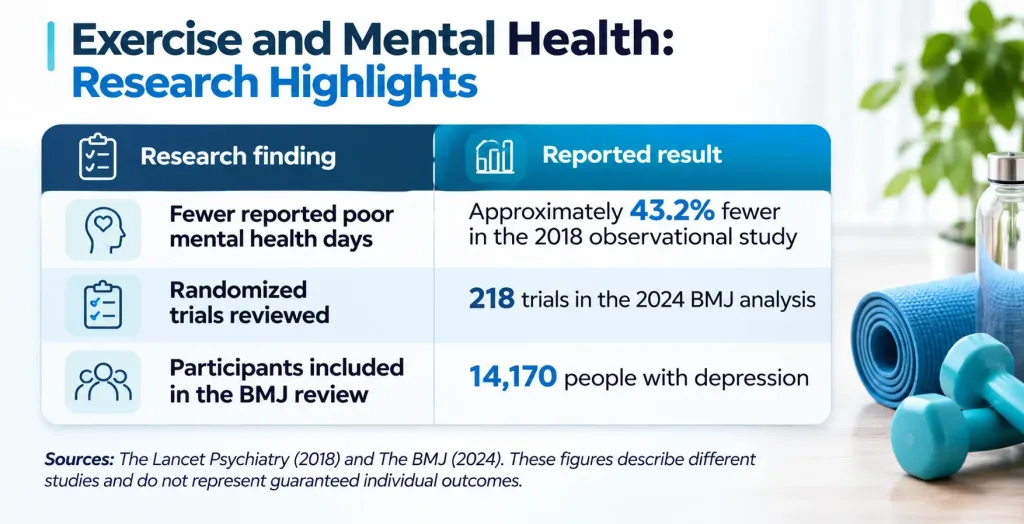
A 2018 study published in The Lancet Psychiatry analyzed data from 1,237,194 American adults.
Researchers found that participants who exercised reported approximately 43.2% fewer days of poor mental health during the previous month than those who did not exercise.
This was an observational association, meaning it does not establish that exercise alone caused the difference.
More recently, a 2024 systematic review published in The BMJ analyzed 218 randomized trials involving 14,170 participants with depression.
The findings suggested that activities such as walking, jogging, yoga, and strength training can help reduce depressive symptoms. However, the researchers also noted limitations in the quality and certainty of some evidence.
Overall, the evidence supports exercise as a potentially valuable part of mental health care. However, the benefits should not be interpreted as a replacement for professional treatment.
7 Best Exercises for Mental Health
There’s no single exercise that works perfectly for everyone. The best exercises for mental health are activities you enjoy, can perform safely, and can maintain consistently.
Here are seven activities that may support mood, stress management, and overall emotional well-being.
Walking A Simple Way to Clear Your Mind
Walking is one of the most accessible mental health exercises because it requires little equipment or preparation.
A brisk walk can provide a change of environment, interrupt prolonged sitting, and help manage everyday stress. Spending time outdoors may also make physical activity more enjoyable.
Walking can be particularly helpful for people who find intense workouts difficult or are just beginning an exercise routine.
Try this: Start with a comfortable 10–15-minute walk. Gradually increase your walking time or pace as your fitness improves.
Yoga Combining Movement and Relaxation
Yoga combines physical postures, controlled breathing, and focused attention.
This combination may help people manage stress, improve flexibility, and become more aware of physical tension. The breathing and mindful movement involved can also provide an opportunity to slow down and focus on the present moment.
The 2024 BMJ systematic review identified yoga among the activities associated with improvements in depressive symptoms.
You don’t need advanced poses to experience its potential benefits. Gentle, beginner-friendly sessions can provide an accessible starting point.
Try this: Begin with 10–15 minutes of gentle yoga, focusing on comfortable movements and controlled breathing.
Strength Training Building More Than Muscle
Strength training isn’t only about physical appearance. It can also support mental well-being by providing a sense of progress and improving confidence in everyday physical activities.
Resistance exercises may help reduce depressive symptoms, according to research included in the 2024 BMJ review.
You don’t necessarily need gym equipment to begin. Bodyweight movements and resistance bands can provide manageable options for beginners.
Try this: Start with simple exercises such as chair squats, wall push-ups, or resistance-band movements. Focus on proper technique before increasing resistance.
Cycling Movement With a Change of Scenery
Cycling combines aerobic activity with an opportunity to explore your surroundings.
It can support cardiovascular fitness and provide a structured break from everyday responsibilities. Some people also find outdoor cycling enjoyable because it combines physical activity with time outside.
If outdoor cycling isn’t convenient, stationary cycling offers an indoor alternative.
Try this: Begin with a comfortable 10–15-minute cycling session. Choose a safe route or a suitable stationary bike and gradually increase your activity.
Dancing Making Exercise Enjoyable
Not every workout needs to feel like a workout.
Dancing combines movement, rhythm, coordination, and sometimes social interaction. It can make physical activity more enjoyable, which may help people maintain an exercise routine.
Research included in the 2024 BMJ review also found promising results for dance in reducing depressive symptoms, although the evidence should be interpreted cautiously.
Whether you follow a dance class or move to music at home, the activity can provide an enjoyable way to stay physically active.
Try this: Put on your favorite music and dance for 10–15 minutes at a comfortable intensity.
Swimming A Full Body Activity
Swimming engages multiple muscle groups while offering an alternative to high-impact activities.
Some people find its rhythmic movements and controlled breathing relaxing. It can also support cardiovascular fitness without the same impact forces associated with activities such as running.
Although the mental health benefits of swimming are less directly established in the research discussed above, it can still be a useful form of regular physical activity.
Try this: If you’re comfortable in water, begin with a short swimming session at a supervised facility. Adjust the duration according to your swimming ability and fitness level.
Tai Chi Gentle Movement and Mindful Attention
Tai chi involves slow, controlled movements, balance, and coordinated breathing.
It may appeal to people who prefer gentle physical activity rather than intense workouts. The focus on controlled movement can also encourage relaxation and body awareness.
Some research suggests that tai chi and related mind-body activities may help reduce depressive symptoms, although the strength of evidence varies.
Its gentle pace may make it a suitable option for many older adults and people looking for lower-impact movement.
Try this: Start with a beginner-friendly tai chi class or a short guided session. Focus on slow movements, balance, and comfortable breathing.
Which Mental Health Exercises Should You Choose?
The right exercise depends on your fitness level, interests, physical abilities, and personal goals.
Some activities focus more on aerobic fitness, while others emphasize relaxation, strength, or mindful movement.
The following comparison can help you decide where to begin.
| Exercise | Potential Benefits | Beginner-Friendly? |
|---|---|---|
| Walking | Mood support, stress management, and cardiovascular fitness | Yes |
| Yoga | Relaxation, flexibility, and mindful attention | Yes, with suitable classes |
| Strength Training | Physical confidence, strength, and mood support | Yes, with guidance |
| Cycling | Aerobic fitness and enjoyable movement | Yes |
| Dancing | Enjoyment, coordination, and social connection | Yes |
| Swimming | Full-body activity and cardiovascular fitness | Depends on swimming ability |
| Tai Chi | Balance, relaxation, and controlled movement | Yes |
These are potential benefits rather than guaranteed treatment outcomes.
If you prefer gentle movement, walking, yoga, and tai chi may be suitable starting points. If you enjoy more energetic activities, cycling, dancing, or swimming may be worth exploring.
The most useful choice is one that fits your lifestyle and feels comfortable enough to maintain.
How Much Exercise Do You Need for Mental Health Benefits?
You don’t need to exercise for hours every day to support your mental well-being.
The World Health Organization recommends that adults aim for:
- 150–300 minutes of moderate-intensity aerobic activity per week.
- 75–150 minutes of vigorous-intensity aerobic activity per week.
- Muscle-strengthening activities involving major muscle groups on at least two days per week.
For example, 30 minutes of moderate activity on five days per week can help reach the lower recommended aerobic target.
However, these are general physical activity guidelines, not a minimum requirement for experiencing mental health benefits. Even shorter sessions can be useful, particularly for people who are currently inactive.
How to Exercise Safely for Better Mental Health
Physical activity should support your well-being rather than create additional physical or emotional pressure.
A few simple precautions can make starting an exercise routine easier and safer:
- Start gradually: Choose activities that match your current fitness level instead of beginning with demanding workouts.
- Choose comfortable activities: Avoid forcing yourself into exercises that cause discomfort or feel unsuitable.
- Stay hydrated: Drink enough water before and after physical activity, especially in warm weather.
- Allow recovery time: Rest is important for muscle recovery and maintaining a sustainable routine.
- Pay attention to your body: Stop exercising if you experience concerning symptoms such as chest pain, dizziness, or unusual shortness of breath.
- Seek professional guidance when needed: If you have an existing medical condition or concerns about starting exercise, consult a healthcare professional.
The goal is to build a routine that supports both physical health and emotional well-being.
Can Exercise Replace Therapy or Medication?
Exercise can play an important role in mental healthcare, but it shouldn’t automatically replace professional treatment.
For some people experiencing mild symptoms, regular physical activity may be a helpful part of a broader approach to managing stress, anxiety or low mood.
Others may need psychotherapy, medication or additional professional support.
Evidence supporting exercise for mental health is encouraging, but treatment decisions should consider symptom severity, medical history, personal preferences and professional recommendations.
People experiencing persistent depression or anxiety should not feel pressured to manage their condition through exercise alone.
If symptoms interfere with daily activities, relationships, sleep, or work, speaking with a qualified mental health professional is an important step.
How to Make Exercise a Sustainable Habit
Finding the perfect activity isn’t always the biggest challenge. Building a routine that fits your everyday life can be more difficult.
The following strategies can help make physical activity easier to maintain:
- Set small goals: Begin with short sessions instead of expecting yourself to complete long workouts immediately.
- Choose activities you enjoy: Walking, dancing, swimming, or cycling can make exercise feel less like an obligation.
- Create a realistic schedule: Set aside specific times for physical activity that fit your daily responsibilities.
- Exercise with someone: A friend or family member can provide encouragement and make activities more enjoyable.
- Track your progress: Notice improvements in consistency, energy, sleep, or fitness rather than focusing only on performance.
- Be flexible: If you miss a workout, return to your routine when you’re ready instead of treating it as a failure.
Most importantly, exercise should support your well-being, not become another source of pressure.
Movement Can Support a Healthier Mind
Exercise offers benefits that extend beyond physical appearance and fitness.
From walking and yoga to strength training and dancing, different forms of physical activity can support mood, sleep, stress management, and overall mental well-being.
Research continues to highlight the connection between exercise and mental health, showing that regular movement can be a valuable part of a healthy lifestyle.
However, the best exercise routine isn’t necessarily the most demanding one. It’s the one you enjoy, can maintain, and can adapt to your individual needs.
Start with small steps, stay consistent, and remember that physical activity can complement professional mental health care when additional support is needed.
Medical Disclaimer: This article is for educational purposes only and does not replace professional medical or mental health advice, diagnosis, or treatment.
Better Mental Healthcare. Smarter Billing.
Support your mental health practice with MedMax RCM’s specialized billing, coding, and claims management solutions designed for smoother operations.
Discover Mental Health Billing
Stay Updated
Get weekly RCM insights, trends and expert strategies delivered to your inbox.